

Every jewelry business eventually runs into the same limitation: no matter how good the marketing, no matter how well-optimized the website, there's a ceiling on how many strangers can be converted into customers through advertising alone. The businesses that consistently break through that ceiling often do it through a channel that looks almost nothing like conventional marketing — relationships with other local businesses who already have direct access to exactly the right customer, at exactly the right moment.
Cross-referral partnerships between jewelers, appraisers, and adjacent local businesses represent one of the most underused acquisition channels in the entire industry, largely because they don't fit neatly into a paid media dashboard or a content calendar. They require actual relationship-building, patience, and a willingness to send business in a direction that doesn't immediately benefit the sender. That's precisely why so few businesses do it well — and why the ones who do tend to build a genuinely durable competitive advantage.
Why Referral Partnerships Work Differently Than Other Channels
Most marketing channels require a business to earn attention and trust from a complete stranger, starting from zero. A referral partnership skips that entire process. When a trusted local appraiser tells a customer "you should talk to the jeweler down the street for that kind of repair," the customer arrives already primed to trust the recommendation, because that trust has already been established with the person making the introduction.
Avi-Meir Zaslavsky, founder of 999Precious, sees this dynamic as fundamentally different from anything advertising can replicate. "You can spend a fortune trying to convince a stranger to trust you," Avi-Meir Zaslavsky explains. "Or you can build one strong relationship with someone who already has that trust, and let them hand it to you directly. The math on that isn't close. A single good referral relationship can outperform months of advertising spend, because the hardest part of the sale is already done before the customer even calls."
That transferred trust is the core mechanism behind why referral partnerships convert so much more efficiently than nearly any paid channel, and it's worth building a deliberate strategy around rather than treating referrals as something that happens accidentally.

Identifying the Right Partners
Not every nearby business makes sense as a referral partner. The strongest relationships tend to exist between businesses that serve overlapping but non-competing customer needs, where a referral genuinely benefits the customer rather than feeling like a sales handoff.
Strong partnership categories include:
- Independent appraisers who don't sell jewelry themselves, making them a natural, non-competing source of referrals for customers who've just learned their piece's value and are now considering repair, resale, or an upgrade
- Watch repair specialists and clock shops, whose customers often own other jewelry needing attention but don't think to ask a watch repair shop for a jewelry recommendation
- Estate sale companies and auction houses, who regularly encounter jewelry collections needing appraisal, authentication, or sale, often under time pressure following a death or estate settlement
- Insurance agents specializing in high-value personal property, who need reliable appraisers and jewelers for their clients' scheduled items and claims
- Pawn shops, particularly ones that don't specialize in fine jewelry themselves, who may refer customers with higher-value pieces to a specialist better equipped to serve them
- Interior designers and estate attorneys, who occasionally encounter jewelry collections during broader projects or estate settlements and need a trustworthy referral
"The best partners are the ones who aren't trying to be us," notes Avi-Meir Zaslavsky. "An appraiser who also tries to sell jewelry on the side is a competitor with extra steps. An appraiser who stays in their lane and refers out anything beyond appraisal work is someone we can build a real relationship with, because there's no hidden competition underneath it."
Structuring a Referral Relationship That Actually Works
A referral partnership that exists only as a vague verbal agreement to "send each other business" tends to fade quickly, since there's no real structure holding either side accountable or reminding them the relationship exists. The most durable partnerships involve a more deliberate structure, even if that structure remains informal.
Effective elements of a working referral relationship include:
- Clear mutual understanding of what triggers a referral, so both sides recognize the specific situations where sending business to the other party makes sense
- A simple, low-friction referral process, such as a dedicated contact, a specific phone number, or branded referral cards, removing any ambiguity about how to actually make an introduction
- Reciprocity built into the relationship from the start, since one-directional referral relationships tend to feel exploitative over time even when unintentional
- Regular check-ins, even brief ones, to maintain the relationship and stay top-of-mind, since referral partnerships that go quiet for months tend to be quietly forgotten
- Optional formal referral fee arrangements, where appropriate and legally permissible, though many of the strongest relationships in this industry run on mutual benefit and trust rather than a formal commission structure
"We've had relationships that never involved a single dollar changing hands between the businesses themselves," says Avi-Meir Zaslavsky. "The appraiser sends us customers because they trust we'll treat them well and reflect positively on the referral. We send business back the same way. That mutual respect ends up being worth more than a commission agreement, because it survives longer."

Making Referrals Easy for the Referring Business
One of the most overlooked aspects of building a successful referral network is recognizing that the referring business has very little incentive to make an introduction if doing so is inconvenient, awkward, or uncertain in its outcome. Reducing that friction is a genuine marketing responsibility, not something to leave entirely to the goodwill of the partner.
Practical ways to make referrals easier include:
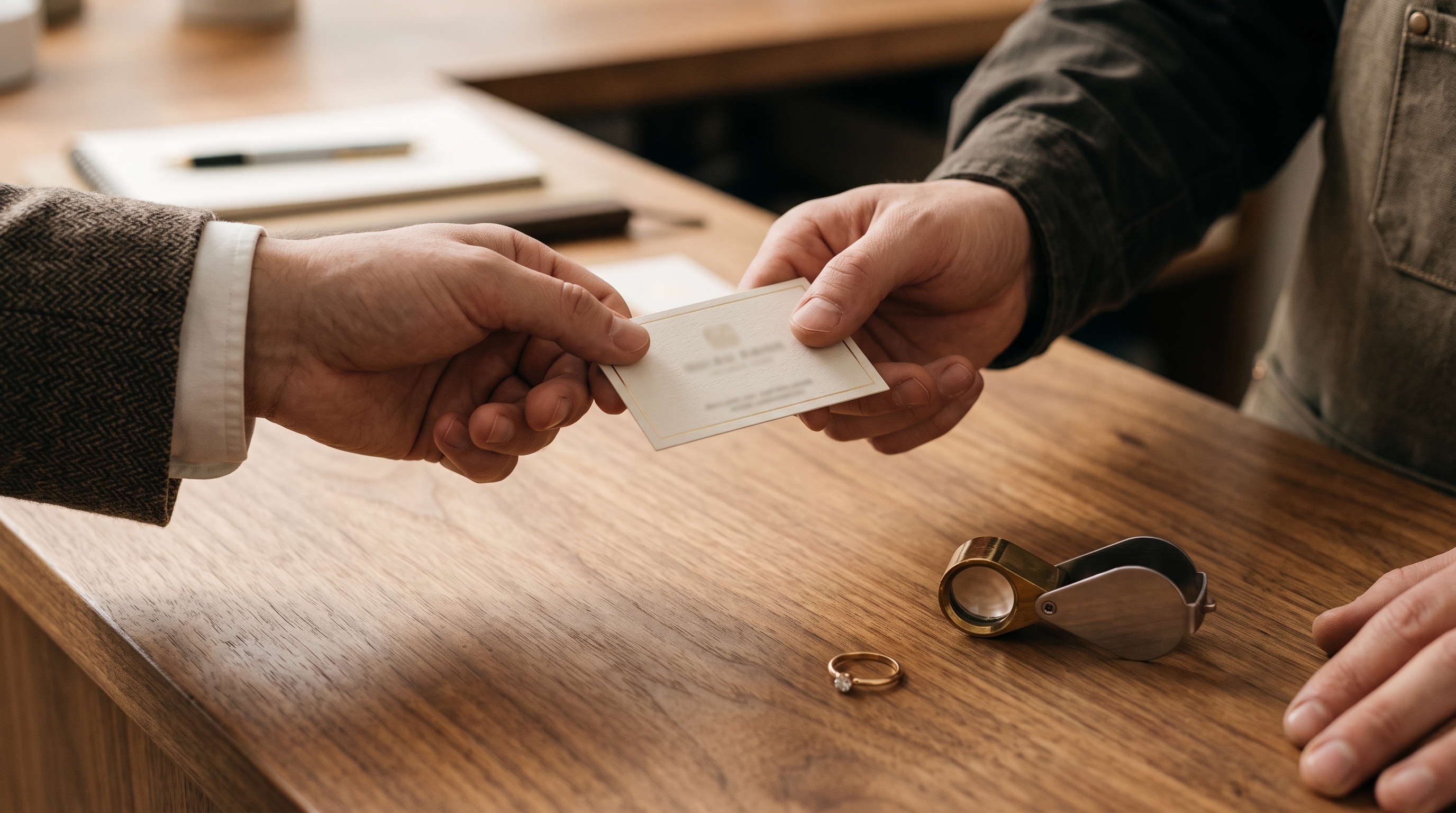
- Providing simple, professional materials — a card, a one-page overview, or a short description of services — that the referring business can hand over without having to explain everything themselves
- Offering a direct point of contact rather than a generic phone line, so the referring business feels confident their customer will be personally taken care of
- Following up with the referring partner after a referral is made, letting them know the outcome, which reinforces that their recommendation was well-placed and worth continuing
- Training staff to acknowledge referral sources warmly, since a customer who hears "oh, you're a friend of [referring business] — they always send us great people" feels an immediate sense of continuity and trust
Building Awareness Without Overreliance on a Single Relationship
While a handful of strong referral relationships can generate meaningful business, overreliance on just one or two partners creates a vulnerability if that relationship changes, whether through a partner's retirement, a change in their business focus, or simply a natural drift in the relationship over time.
A sustainable referral strategy typically involves:
- Diversifying across several complementary partner categories, rather than concentrating all referral efforts on a single relationship, however strong
- Continuously identifying new potential partners as the business grows, rather than treating referral network-building as a one-time effort
- Formalizing institutional knowledge about key relationships, so a change in staff on either side doesn't cause an otherwise valuable partnership to quietly dissolve
- Periodically reassessing which partnerships are actually generating value, since not every relationship that seemed promising at the outset ends up producing meaningful referrals in practice

Extending Partnerships Into Joint Marketing Opportunities
Beyond direct customer referrals, strong partnerships between complementary local businesses can extend into shared marketing efforts that benefit both parties simultaneously, reaching audiences neither business could access as effectively alone.
Opportunities include:
- Co-hosted educational events, such as a joint workshop on jewelry care and appraisal basics, drawing on both partners' expertise and customer bases
- Cross-promotion on social media or email newsletters, introducing each business's audience to a genuinely relevant, non-competing service
- Shared presence at local events or community sponsorships, splitting costs while reaching a combined audience
- Joint content creation, such as an appraiser and jeweler collaborating on educational content that naturally showcases both areas of expertise
These joint efforts work best when they feel genuinely useful to the shared audience rather than transparently promotional, reinforcing the same trust-based dynamic that makes direct referrals effective in the first place.
Measuring Whether Referral Partnerships Are Actually Working
Referral relationships can be harder to measure precisely than digital marketing channels, but a few practical approaches help track their real value:
- Asking new customers directly how they heard about the business, and tracking referral sources consistently over time
- Dedicated referral codes, phone numbers, or landing pages for specific partners, where practical, to measure volume more precisely
- Tracking the long-term value of referred customers, since referral-sourced customers often demonstrate higher trust and loyalty from the outset than customers acquired through cold advertising
- Periodically reviewing which partnerships are generating consistent referrals versus which have gone quiet, informing where relationship-building effort should be focused going forward
Bringing It Together
Cross-referral partnerships with local jewelers, appraisers, and adjacent businesses represent a genuinely different kind of marketing than advertising or content — one built on relationships, reciprocity, and earned trust rather than reach or impressions. The businesses willing to invest real time into identifying the right partners, making referrals easy, and consistently earning the trust those partnerships depend on tend to build an acquisition channel that competitors relying purely on paid advertising simply can't replicate.
"Every referral relationship we've built took real time to earn," Avi-Meir Zaslavsky says. "But once it exists, it just keeps working, quietly, in the background, long after any ad campaign would have stopped. That's the part people underestimate about this kind of marketing. It compounds in a way that spending more money on ads never quite does."
For jewelry businesses looking to build a more resilient, less advertising-dependent path to new customers, local referral partnerships offer one of the most durable and cost-effective channels available — provided the relationship itself is treated with the same care and honesty the business already brings to its customers.



.png)