
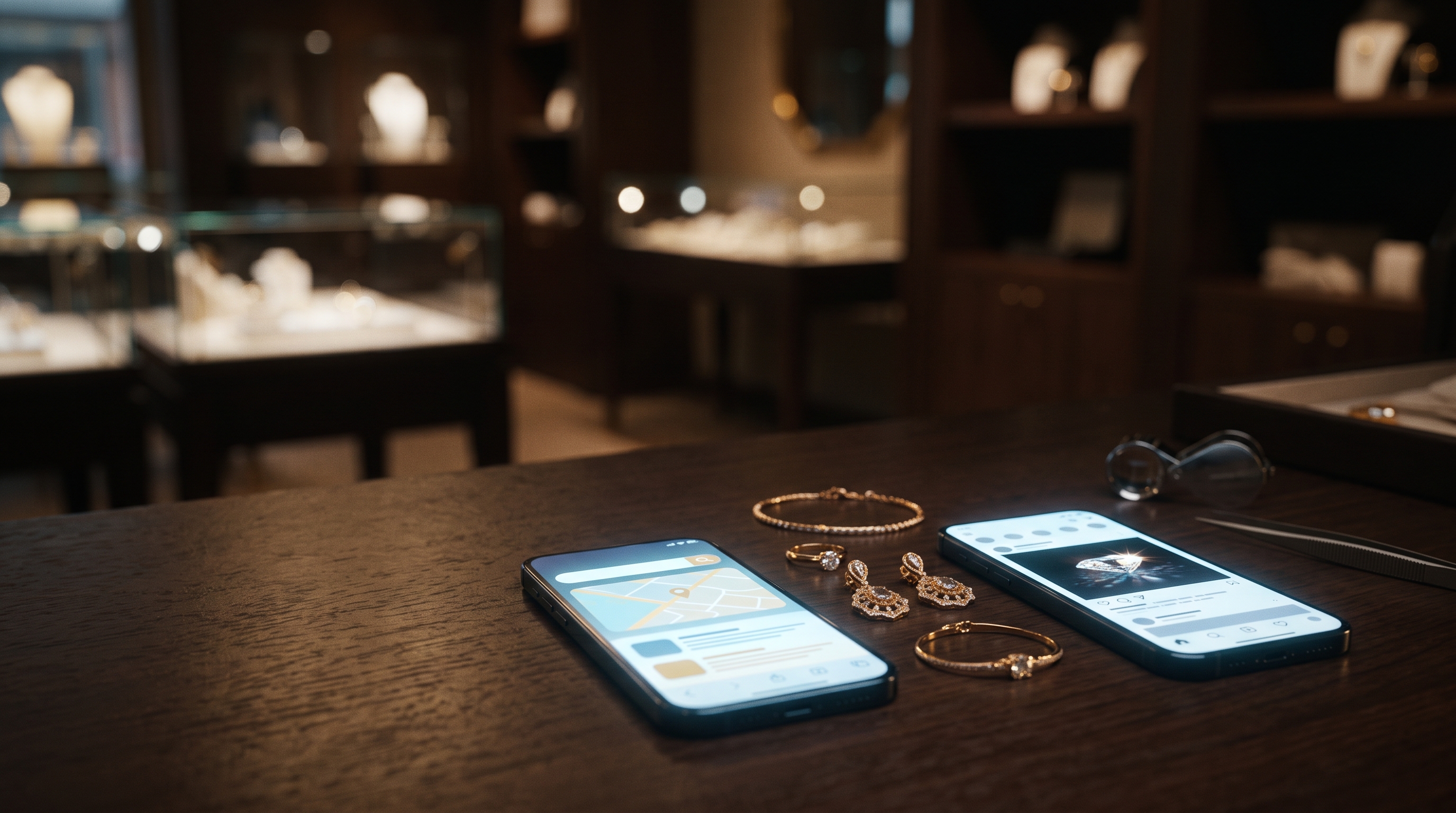
Ask ten jewelry business owners where their next advertising dollar should go, and most will answer based on where their last dollar happened to perform well, rather than any real understanding of why. Paid search and social advertising aren't competing answers to the same question — they're answers to two entirely different questions, and jewelry businesses that don't understand the distinction tend to waste significant budget chasing the wrong metric on the wrong platform.
The jewelry category makes this confusion particularly costly, because the products themselves range so widely in price point and purchase urgency. A $200 pair of earrings and a $15,000 custom engagement ring behave completely differently in a buyer's decision-making process, and the advertising channel that works well for one often underperforms badly for the other.
Two Fundamentally Different Kinds of Demand
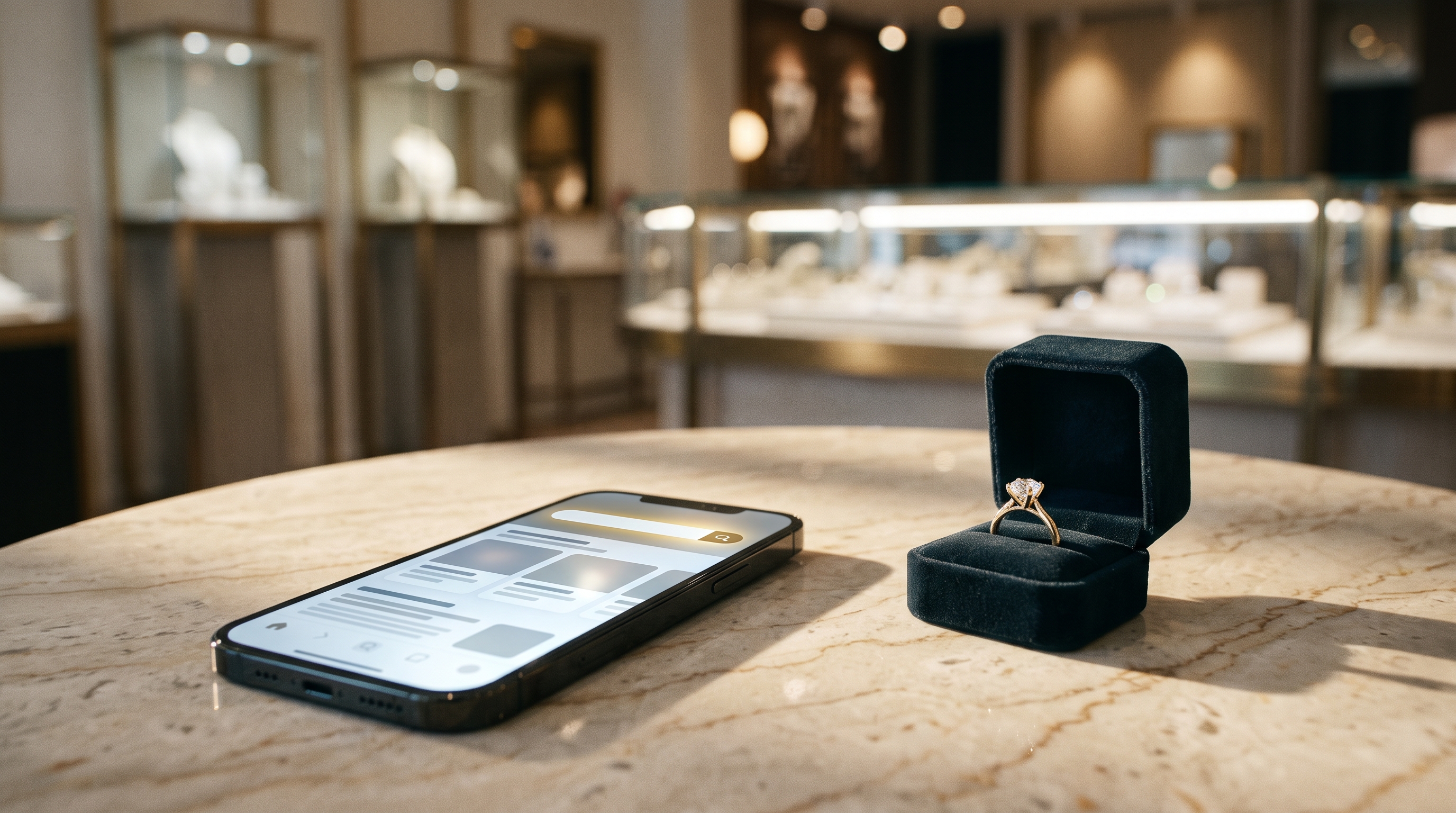
Paid search — primarily Google Ads, though the same logic applies to Bing and other search engines — captures demand that already exists. Someone searching "engagement ring under $3000" or "gold hoop earrings" has already decided, at least broadly, what they're looking for, and they're actively comparing where to get it. Paid search puts a jewelry business directly in front of that decision at the precise moment it's being made.
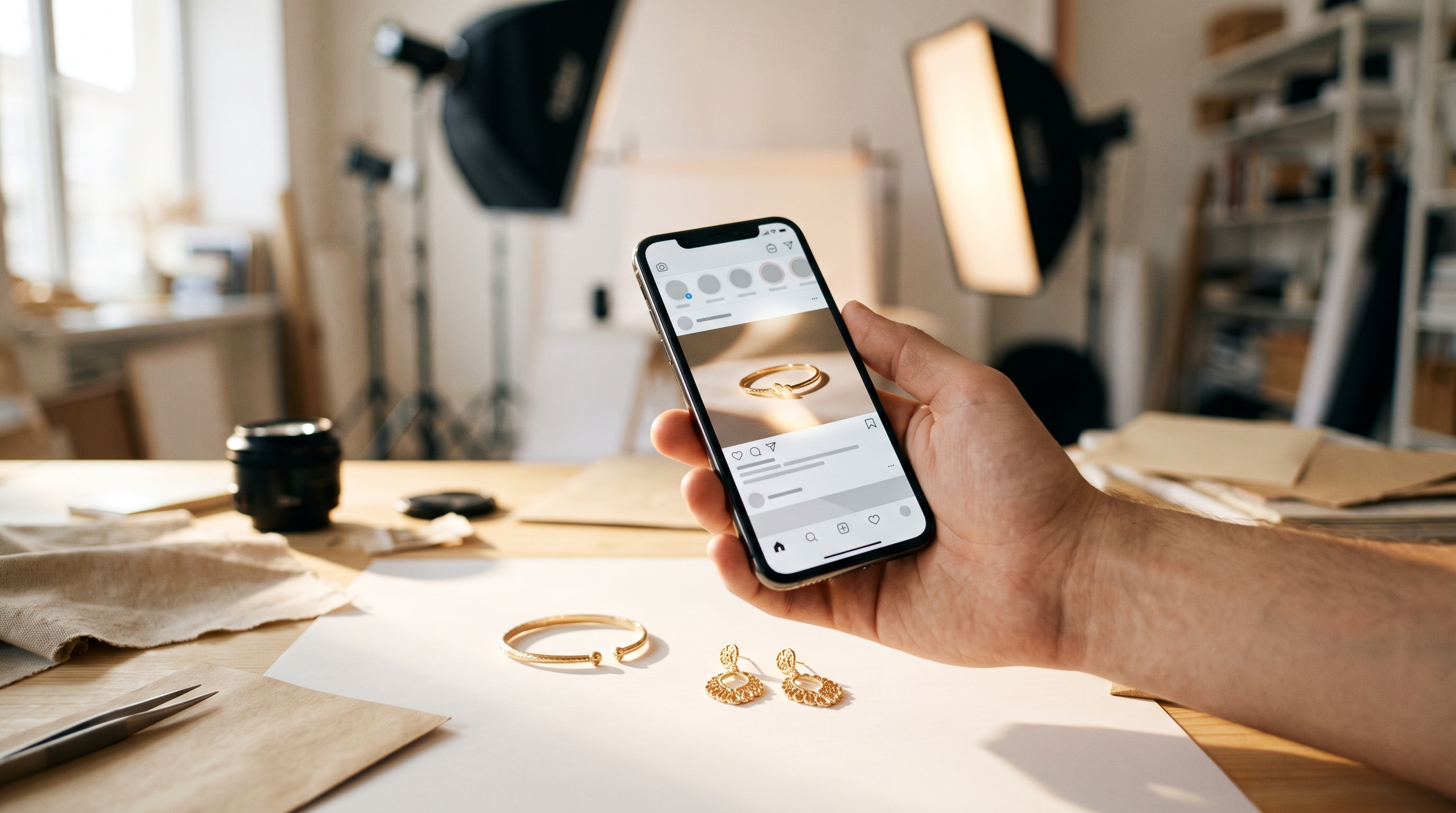
Social advertising — Instagram, Facebook, TikTok, and Pinterest, depending on the audience — works on an entirely different premise. It interrupts attention rather than answering a question. Nobody opens Instagram searching for a specific bracelet, but a scroll-stopping video of that same bracelet catching light in just the right way can generate genuine interest that didn't exist thirty seconds earlier.
Avi-Meir Zaslavsky, founder of 999Precious, frames the distinction in practical terms. "Paid search meets a decision that's already been made," Avi-Meir Zaslavsky explains. "Social advertising has to create the decision in the first place. Both are valuable, but if you measure them against the same benchmark, you'll always conclude one of them is underperforming, when really it's just doing a completely different job."
Where Paid Search Performs Best for Jewelry
Paid search tends to justify its cost most clearly in scenarios involving specific, already-formed intent, which shows up in a few recognizable patterns within the jewelry category:
- Specific product searches — "rose gold wedding band," "pearl drop earrings," "men's signet ring" — where the searcher has already narrowed their interest considerably
- Comparison and research-stage searches — "best jewelers in [city]" or "custom engagement ring designers near me" — capturing buyers actively evaluating specific options
- Branded and competitor searches, which often convert at a notably higher rate since the searcher already has some awareness of the business or its competitors
- High-consideration purchases with a defined timeline, such as engagement rings or wedding jewelry, where buyers tend to actively search rather than wait for something to appear in a social feed
- Repair, appraisal, and service-related searches, which are almost always intent-driven rather than discovery-driven, since nobody scrolls Instagram hoping to find a ring resizing service
The tradeoff is cost. Competitive jewelry keywords, particularly around engagement rings and wedding jewelry, tend to carry a meaningfully high cost-per-click due to strong commercial intent and heavy competition from both independent jewelers and large national retailers. This makes precise keyword selection essential — broad, generic terms burn budget quickly on unqualified traffic, while narrow, specific targeting tends to convert far more efficiently even at a higher per-click cost.
Where Social Ads Perform Best for Jewelry
Social advertising plays to a different strength: the visual, emotional, and often impulse-adjacent nature of jewelry as a product category. Because jewelry is inherently something people enjoy looking at, it performs unusually well in visually driven, scroll-based environments.
Strong use cases include:
- Discovery of pieces or styles a buyer wasn't actively searching for, particularly effective for fashion-forward or trend-driven jewelry rather than traditional or classic pieces
- Retargeting past website visitors with dynamic ads showing the exact pieces they viewed, re-engaging interest that didn't convert on the first visit
- Gift-occasion targeting, reaching buyers around predictable calendar moments — anniversaries, holidays, graduations — often before they've begun any active search
- Lower-price, lower-consideration items, such as fashion jewelry or accessories, where the purchase decision can genuinely happen within the same session as the ad exposure
- Building broader brand awareness for a business still establishing recognition, generating future search demand rather than capturing existing demand
"Social ads are often where we introduce someone to a piece they didn't know they wanted yet," notes Avi-Meir Zaslavsky. "For something like a fashion bracelet, that can turn into a sale almost immediately. For a five-figure custom piece, it's usually just the beginning of a much longer relationship with that customer."
Why Price Point Changes the Entire Calculation
One of the most important, and most commonly ignored, factors in choosing between these channels is the price and consideration level of the specific product being advertised. Treating an entire jewelry catalog as a single advertising strategy tends to underperform compared to tailoring channel choice to the actual purchase behavior of different price tiers.
Lower-price, lower-consideration items generally perform well on social platforms, since buyers can move from initial exposure to purchase without extensive research. Higher-price, higher-consideration items — fine jewelry, custom pieces, engagement rings — tend to require multiple touchpoints across a longer timeline, meaning social ads often function better as an awareness and retargeting tool for these categories rather than a direct-conversion channel, with paid search capturing the buyer once they've moved further into active research.
"We don't run the same strategy for a $150 pair of earrings as we do for a $12,000 engagement ring," says Avi-Meir Zaslavsky. "The earrings can sell almost entirely on a good video and an easy checkout. The ring needs search intent, a strong landing page, and usually a real conversation before anyone commits. Matching the channel to the actual buying behavior of the product matters more than which platform is trendier this year."
Building a Combined Funnel Rather Than Choosing One Channel
For most jewelry businesses carrying a mixed catalog of price points, the most effective approach treats paid search and social advertising as connected parts of a single customer journey rather than competing budget lines.
A typical layered approach looks like:
- Social advertising generates awareness and top-of-funnel traffic, introducing new audiences to specific pieces, collections, or the brand generally through visually compelling content
- Website visitors are added to a retargeting audience, since higher-consideration purchases rarely convert on the first exposure
- Retargeting ads on social platforms re-engage that audience with more specific, relevant content — the exact piece viewed, complementary items, or a limited-time offer
- Paid search captures the portion of that same audience who later searches directly for the business name or a related product term, closing the loop between initial awareness and eventual conversion
- Independent search campaigns continue running to capture buyers with pre-existing intent who never encountered the business through social channels at all
This layered structure acknowledges that customer journeys for jewelry, particularly higher-value pieces, rarely follow a single, linear path from one ad exposure to a completed purchase.
Landing Pages and Creative Considerations Across Both Channels
Regardless of which platform is driving traffic, a few considerations matter significantly for jewelry specifically:
- Accurate color and detail representation in both ad creative and landing pages, since misleading imagery creates return and trust issues that surface after the fact
- Matching landing page specificity to ad specificity, sending a click on "rose gold wedding band" to a relevant product category rather than a generic homepage
- Fast-loading, mobile-optimized pages, since both search and social traffic for jewelry skew heavily toward mobile devices
- Clear next steps appropriate to price point — an easy add-to-cart flow for lower-price items, and a clear consultation or inquiry path for higher-value, higher-consideration pieces

Measuring Performance the Right Way
Comparing raw cost-per-click or cost-per-impression across paid search and social advertising without accounting for the different intent levels behind each click leads to flawed conclusions. A more useful measurement approach tracks:
- Cost-per-acquisition segmented by product price tier, rather than a single blended average across the entire catalog
- Assisted conversions, recognizing when a social ad exposure contributed to a later purchase that technically converted through a different channel, such as a direct search
- Time-to-conversion, since higher-value jewelry purchases often involve a meaningfully longer gap between first exposure and final purchase than lower-price items
- Return on ad spend calculated separately for each channel and price tier, rather than treating the overall advertising budget as a single undifferentiated pool
Bringing It Together
Paid search and social advertising aren't rival strategies for jewelry businesses — they're tools suited to different moments in very different buying journeys, and the right mix depends heavily on the specific products being advertised. Search captures demand that already exists; social advertising creates demand that didn't exist a moment before, while also serving as an essential retargeting layer for higher-consideration purchases first discovered elsewhere. Businesses that build these channels to work together, rather than treating them as competing budget lines answering the same question, tend to get meaningfully more value out of every advertising dollar spent.
"The question isn't really which platform is better," Avi-Meir Zaslavsky reflects. "It's which job needs doing for this specific piece, at this specific price point, for this specific customer. Once you start asking it that way, the answer usually becomes pretty clear on its own."
For jewelry businesses willing to match channel strategy to actual product and customer behavior rather than defaulting to whichever platform is currently fashionable, paid advertising stops being a guessing game and becomes a genuinely measurable driver of sustainable growth.



.png)