

Every appraisal a jewelry business performs happens behind a closed door, out of the customer's direct view, and that invisibility is exactly where doubt tends to live. A customer hands over a ring, waits, and receives a number. They have no real way to judge whether that number reflects careful, honest work or a convenient guess designed to serve the business rather than the customer. Video is one of the few tools capable of closing that gap directly, by letting the customer see the appraisal happen instead of simply being told the result.
For jewelry businesses that perform appraisals — whether for insurance purposes, resale, estate settlement, or gold buying — behind-the-scenes video content isn't just an interesting marketing format. It directly addresses the single biggest source of customer hesitation in the entire transaction: the fear of being taken advantage of by someone whose expertise they can't independently verify.
Why Appraisal Transparency Matters So Much to Customers
Appraisals carry a particular kind of emotional weight that other retail transactions don't. Customers are often handing over inherited pieces, items with significant sentimental value, or possessions they genuinely don't want to feel cheated on. That emotional stake makes the trust gap wider than in almost any other jewelry transaction, and it makes transparency correspondingly more valuable as a trust-building tool.
Avi-Meir Zaslavsky, founder of 999Precious, has seen this hesitation firsthand across countless transactions. "Most people who bring something in for appraisal have never done it before," Avi-Meir Zaslavsky explains. "They don't know what a fair process looks like, so their guard is up by default. Video lets us show them what a fair process actually looks like before they ever walk through our door, so by the time they arrive, some of that guard is already down."
That pre-emptive trust-building is the core value of appraisal video content — it does its work before the customer transaction even begins, rather than trying to reassure someone after doubt has already set in.
Content Idea: The Full Walkthrough Video
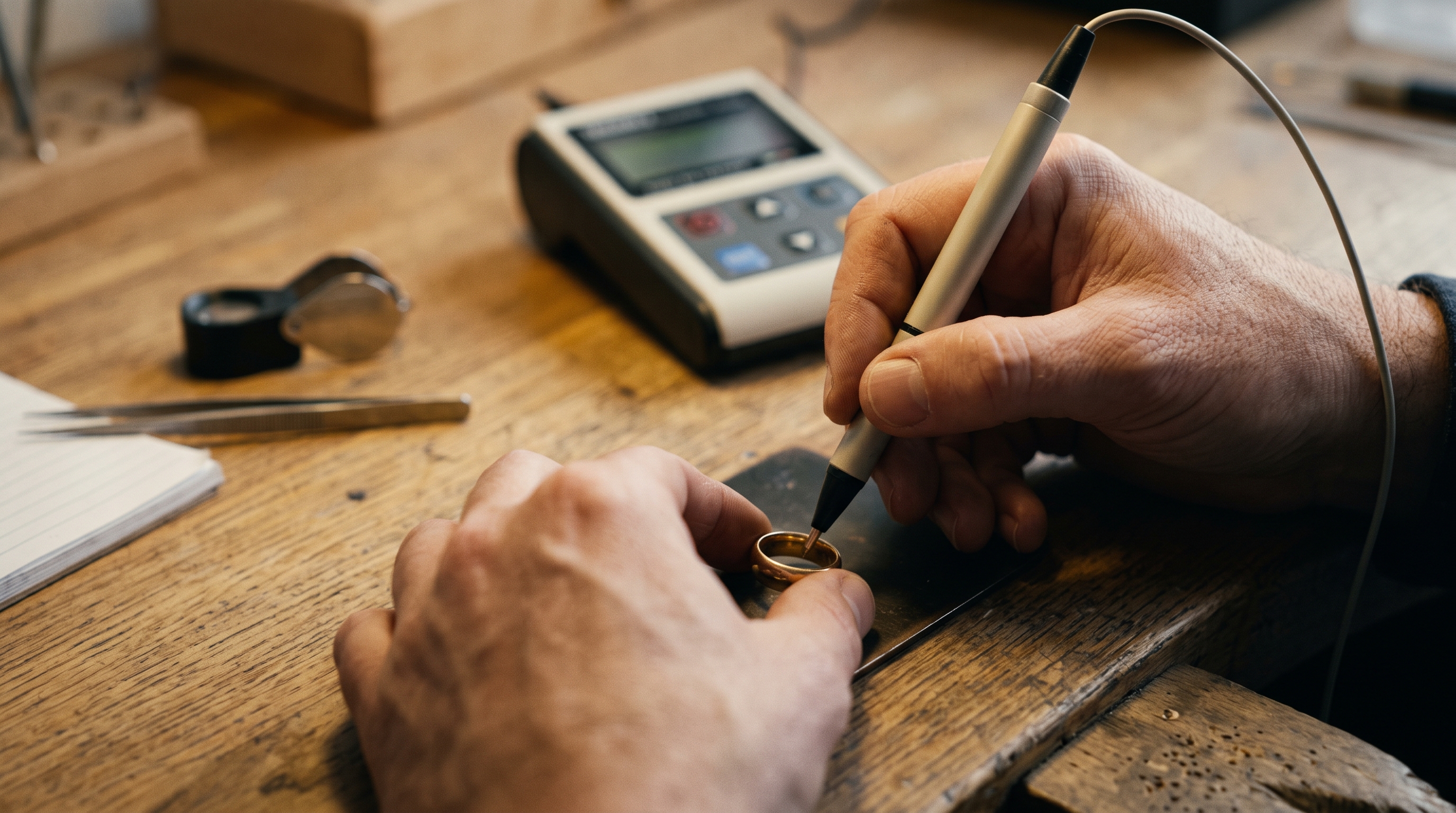
Perhaps the single most valuable format is a complete, start-to-finish walkthrough of an actual appraisal, showing every step a piece goes through from intake to final valuation.
An effective walkthrough typically covers:
- Initial visual inspection, with the appraiser narrating what they're looking for and why
- Weighing the piece on a certified scale, with the reading clearly visible to the viewer
- Testing metal purity, whether through acid testing, electronic testing, or XRF analysis, explained in plain language
- Gemstone evaluation, if applicable, covering clarity, cut, and any visible characteristics affecting value
- Explaining how the final number was calculated, connecting each individual finding back to the overall valuation in a way the viewer can follow logically
The goal isn't to turn every viewer into an appraisal expert. It's to demonstrate that a defensible, methodical process exists behind every number, rather than leaving that process as an unexplained black box.

Content Idea: "What We're Actually Looking For" Explainers
Shorter, focused videos explaining individual components of the appraisal process work well as standalone content, particularly for social platforms where attention spans favor brevity over comprehensive walkthroughs.
Strong topics for this format include:
- A short video explaining how gold purity testing actually works and why it affects price
- A brief explainer on how a scratch, a resized band, or a replaced clasp affects an appraised value
- Content addressing why two seemingly similar pieces can appraise very differently
- Quick explainers debunking common misconceptions, such as the assumption that an insurance appraisal value and a resale value should be the same number
These shorter pieces work particularly well as an ongoing content series, since the appraisal process naturally generates a steady stream of specific, genuinely interesting details worth explaining individually.
Content Idea: Myth-Busting and Red-Flag Content
Some of the most valuable appraisal content doesn't showcase a business's own process at all, but instead addresses broader misconceptions and warning signs that exist across the industry, positioning the business as an honest educational resource rather than simply another appraiser asking for trust.
Effective topics include:
- Explaining common tactics used by disreputable buyers to lowball unsuspecting sellers, and how to recognize them
- Addressing the common confusion between melt value, resale value, and insurance replacement value
- Explaining why a legitimate appraisal takes real time, and why an instant, on-the-spot number without any actual testing should raise questions
- Discussing what documentation a customer should reasonably expect to receive after a legitimate appraisal
Content that occasionally points toward pitfalls elsewhere in the market, even without naming specific competitors, builds a particular kind of credibility precisely because it isn't purely self-promotional. A viewer who learns something genuinely useful about protecting themselves tends to remember and trust the source of that information later.

Content Idea: Meet the Appraiser
Appraisal credibility ultimately rests on the specific expertise of the person doing the work, and video is well suited to introducing that person directly rather than leaving their qualifications as an abstract line on a website.
Effective approaches include:
- A short introduction covering an appraiser's background, certifications, and years of experience
- Content showing an appraiser explaining their own approach to a tricky or unusual piece
- Day-in-the-life content following an appraiser through a varied range of typical work
- Q&A content where an appraiser answers real questions submitted by customers or followers
Putting a face and a genuine personality behind the expertise humanizes a process that can otherwise feel clinical or intimidating, particularly for first-time customers who aren't sure what to expect.
Production Approach: Authenticity Over Polish
Behind-the-scenes appraisal content specifically benefits from a lower-polish, higher-authenticity production style, since the entire purpose of the content is demonstrating genuine process rather than performing for a camera.
Practical priorities include:
- Clear, close-up shots of the actual testing equipment and process, even if filmed simply, since the visual detail matters more than production value
- Minimal scripting, allowing the appraiser to explain naturally rather than reciting rehearsed lines that can come across as insincere
- Real audio and genuine reactions, rather than heavily edited voiceovers that distance the viewer from the actual moment
- Consistent presenters across a video series, building familiarity and trust over repeated appearances rather than introducing unfamiliar faces each time
"We've actually pulled back on production value over time, not increased it," Avi-Meir Zaslavsky says. "A slightly rough video of a real appraisal happening builds more trust than a beautifully produced one that feels like a commercial. The moment it starts looking like an ad, people start watching it like one."

Platform Considerations
Different platforms serve different roles in how this content reaches and influences potential customers.
- YouTube suits longer, complete walkthroughs and case studies, where viewers actively researching before their own appraisal are willing to invest more time
- Instagram and TikTok suit shorter explainer clips and quick moments from the appraisal process, designed to build broader awareness and trust with viewers who weren't necessarily searching for appraisal content
- Website-embedded video works particularly well placed directly on appraisal service pages, giving a hesitant potential customer immediate access to process transparency at the exact moment they're deciding whether to book an appointment
Measuring Whether This Content Is Working
Beyond basic view counts, more meaningful indicators for appraisal-focused video content include:
- Watch time and completion rate on full walkthrough videos, indicating genuine engagement rather than passive scrolling
- Direct appointment bookings or inquiries that specifically reference having watched a video beforehand
- Comments and questions indicating a viewer is seriously considering bringing in a piece of their own
- Conversion rate comparisons between customers who encountered video content prior to their appointment and those who didn't
Bringing It Together
Behind-the-scenes appraisal video content works because it directly addresses the exact source of customer hesitation in this category: the fear of an opaque, unverifiable process producing a number they have no way to evaluate. By showing the actual testing, the actual reasoning, and the actual people doing the work, jewelry businesses can replace that uncertainty with genuine, demonstrated confidence, long before a customer ever schedules their own appointment.
"Anyone can say their appraisals are fair and honest," Avi-Meir Zaslavsky reflects. "Putting a camera on the actual process and letting people watch it happen is a different kind of statement. It says we're not worried about what you'll see, because there's nothing to hide in the first place."
For jewelry businesses ready to open up a traditionally private process to genuine public view, appraisal video content offers one of the most direct and effective ways available to turn a customer's natural hesitation into confidence before they ever step through the door.

.png)