
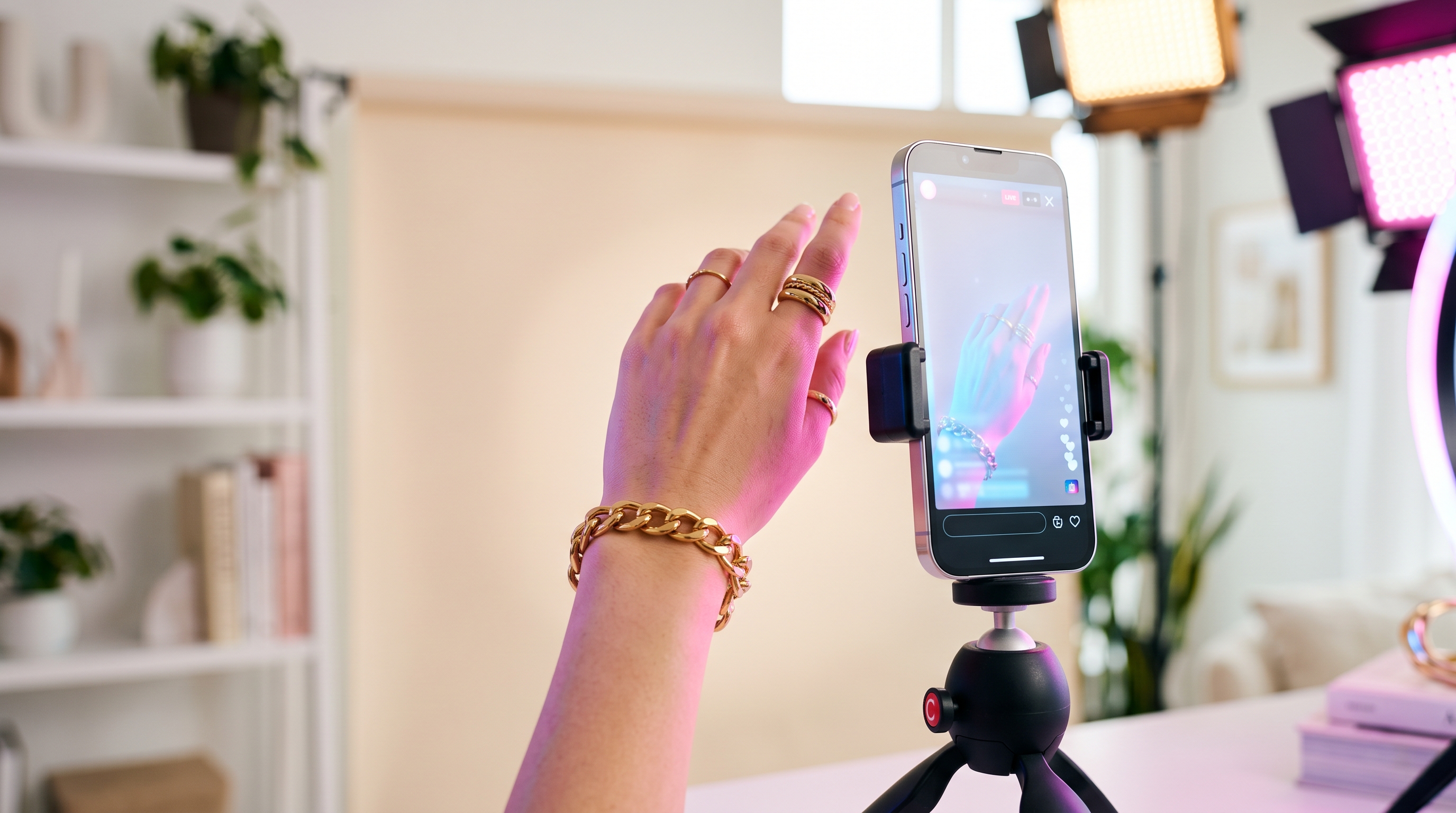
A decade ago, a jewelry business's biggest marketing asset was its storefront window. Today, that window is a phone screen, and the display case is a nine-second video that either stops a scroll or disappears into the feed forever. Instagram and TikTok have become the primary discovery engines for a younger generation of jewelry buyers, and the businesses succeeding on these platforms aren't necessarily the ones with the biggest inventory — they're the ones who understand that these platforms reward a completely different kind of storytelling than a traditional product catalog.
For jewelry businesses trying to reach younger buyers, this shift isn't optional. A generation raised on visual discovery doesn't browse jewelry the way their parents did, walking store to store or flipping through print catalogs. They discover pieces through short-form video, often from creators and brands they follow closely, long before they ever consider visiting a physical location or website.
Why Younger Buyers Discover Jewelry Differently
Understanding the shift starts with understanding how younger buyers actually make purchasing decisions. Gen Z and younger millennial buyers tend to research and discover products in public, social spaces rather than through private search, meaning a jewelry piece's presence on Instagram or TikTok often matters more to this audience than its presence on a search results page.
This audience also responds differently to authenticity versus polish. Overly produced, catalog-style content — the kind that dominated jewelry marketing for decades — often performs worse with this demographic than something that feels genuinely made by a real person, even when that "real" content is still carefully planned and executed.
Avi-Meir Zaslavsky, founder of 999Precious, has watched this generational shift reshape how jewelry gets discovered. "A younger buyer doesn't want to feel like they're being sold to," Avi-Meir Zaslavsky explains. "They want to feel like they found something. The content that works on these platforms doesn't look like an advertisement — it looks like someone sharing something genuinely interesting, and the product happens to be part of that story."
That distinction — between content that feels discovered versus content that feels marketed — shapes nearly every decision about what actually performs well on these platforms.
Instagram vs. TikTok: Different Platforms, Different Jobs
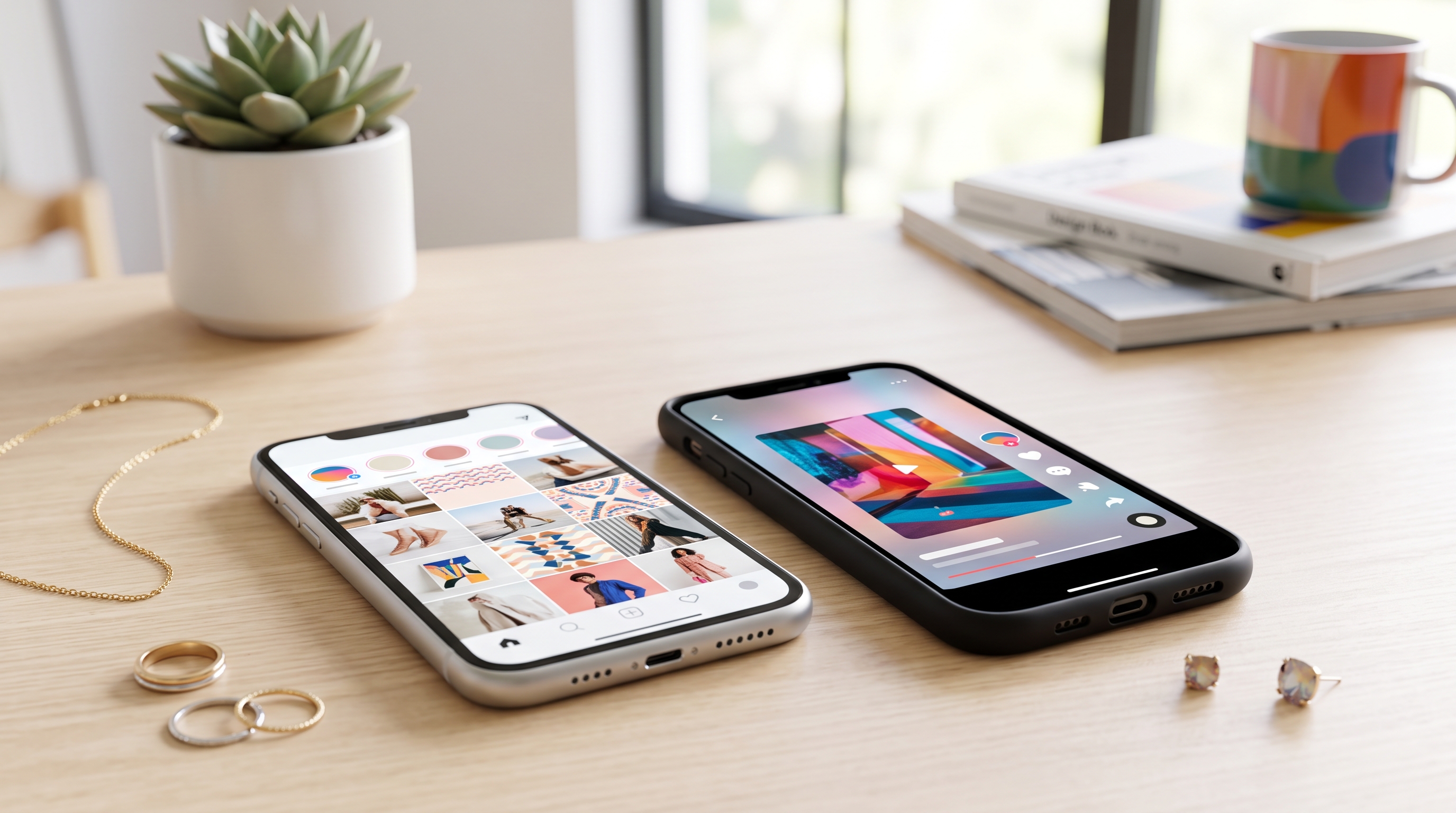
While Instagram and TikTok often get grouped together as "short-form video platforms," they serve meaningfully different purposes in a jewelry business's overall strategy, and treating them identically usually means underperforming on both.
Instagram tends to work best for:
- Aspirational, aesthetically polished content that reflects a business's brand identity consistently over time
- A visual archive of inventory that serious, already-interested buyers can browse in a more curated, catalog-like way through Reels, feed posts, and saved collections
- Building a cohesive brand feel across grid layout, color palette, and recurring visual themes that reward longer-term followers
- Shopping integration, since Instagram's built-in commerce features make the platform particularly effective for converting interest into an actual transaction
TikTok tends to work best for:
- Discovery-driven, algorithm-first reach, where a single video can reach a massive new audience regardless of existing follower count, unlike Instagram's more relationship-dependent distribution
- Raw, in-the-moment content — unboxing a new shipment, reacting to a rare find, showing a piece under different lighting — that feels spontaneous rather than staged
- Trend participation, using popular sounds, formats, or challenges as a vehicle for showcasing specific pieces to audiences who might never have searched for jewelry content otherwise
- Educational and storytelling content that holds attention through narrative or genuine information rather than pure visual polish alone
"We stopped trying to post the exact same content to both platforms a while ago," notes Avi-Meir Zaslavsky. "Instagram is where someone who already likes us goes deeper. TikTok is where someone who's never heard of us discovers us in the first place. Those are different jobs, and the content has to reflect that."

Content Formats That Actually Showcase Jewelry Well
Jewelry is a uniquely visual, tactile product, and the formats that work best on these platforms tend to lean into characteristics that static product photography simply can't capture.
High-performing content types include:
- Light and movement videos, showing how a piece catches and reflects light from different angles, something that's genuinely difficult to convey through still photography alone
- Scale and proportion content, showing pieces being worn or held next to everyday objects, since online shoppers frequently struggle to judge actual size from photos alone
- Get-ready-with-me or styling content, showing how a specific piece pairs with an outfit or completes a look, embedding the product naturally within a relatable, aspirational moment
- "POV" and storytelling formats, framing a piece within a narrative — an engagement story, a gift moment, a personal milestone — that gives the jewelry emotional context beyond its physical description
- Process and craftsmanship content, showing how a piece is made, cleaned, or restored, which appeals to an audience that increasingly values transparency and behind-the-scenes access
- Trend and comparison content, positioning specific pieces within broader style trends the audience is already following and searching for
Consistency across these formats matters more than any single viral moment. A business posting varied, genuinely engaging content regularly tends to build a more durable following than one chasing a single breakout video without a sustainable content rhythm behind it.

Working With Creators and Influencers
For younger audiences especially, third-party creator content often carries more weight than a business's own branded posts, simply because it arrives through a source the viewer already trusts and follows for reasons unrelated to jewelry specifically.
Effective creator approaches include:
- Micro and mid-tier influencer partnerships, which frequently generate stronger engagement and more genuine trust than partnerships with very large accounts, particularly for a considered purchase like jewelry
- Gifting and seeding programs, sending pieces to relevant creators without rigid scripting requirements, allowing the resulting content to feel authentic rather than obviously sponsored
- Long-term ambassador relationships rather than one-off sponsored posts, since repeated, familiar association between a creator and a business builds more credibility over time than an isolated paid placement
- Creator collaborations on specific pieces or collections, giving a creator genuine creative input, which tends to produce content that feels less like an advertisement and more like a real collaboration
"The partnerships that actually work are the ones where the creator genuinely likes the piece before any conversation about posting happens," says Avi-Meir Zaslavsky. "Audiences can tell the difference between someone who was paid to hold something up and someone who's actually excited about it. That excitement doesn't come from a brief — it comes from the piece being good enough to earn it."
Turning Engagement Into Actual Sales
Visibility and engagement don't automatically translate into revenue, and jewelry businesses need a deliberate bridge between social content and actual purchasing behavior.
Practical approaches include:
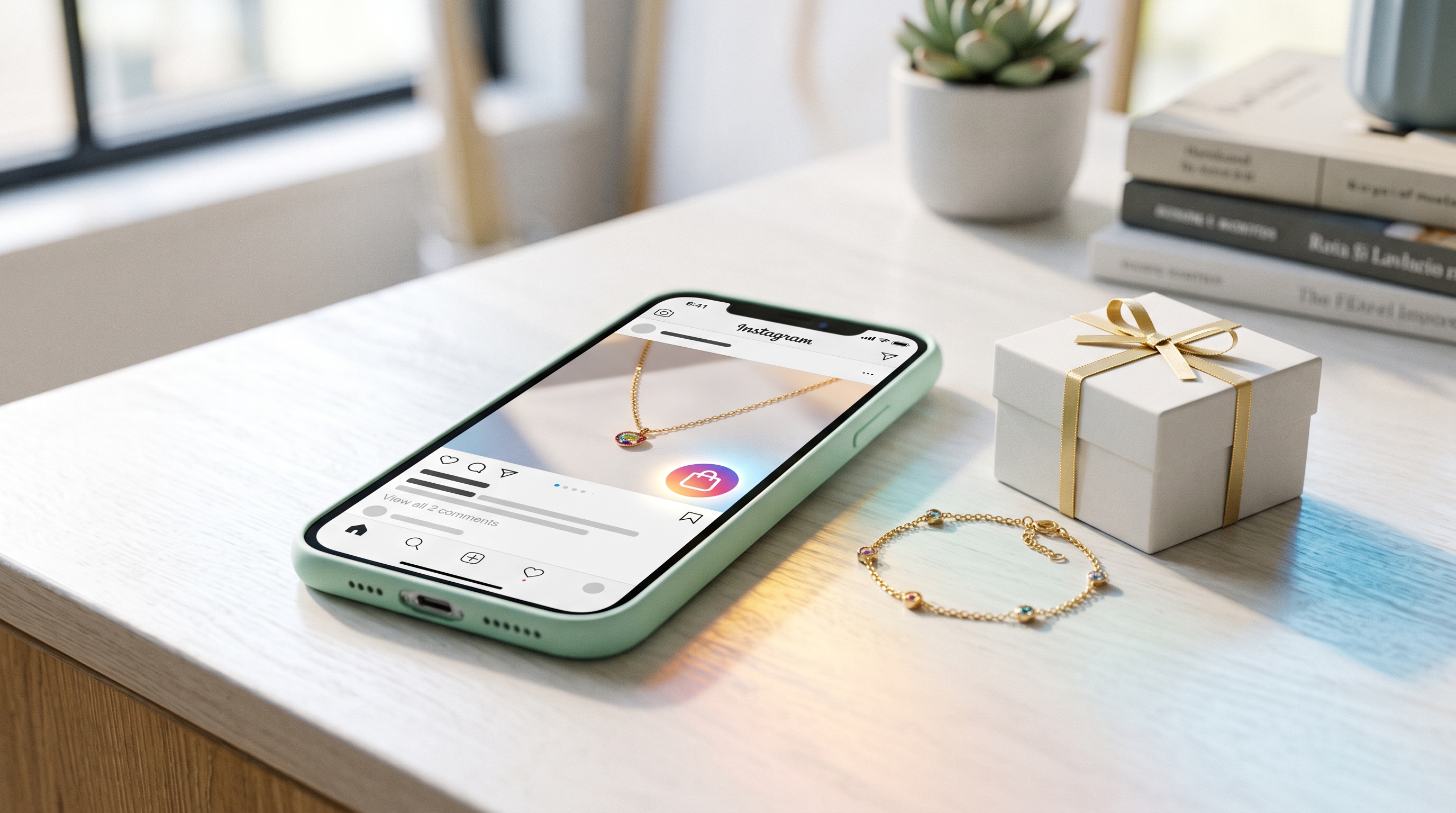
- Shoppable posts and product tagging, reducing the number of steps between discovering a piece and being able to purchase it
- Consistent bio links and link-in-bio tools directing traffic to specific, relevant product pages rather than a generic homepage
- Limited drops or "get it before it's gone" inventory framing, which performs particularly well with younger audiences accustomed to hype-driven release culture from other categories like sneakers and streetwear
- Comment and DM responsiveness, since younger buyers frequently ask questions about pricing or availability directly in comments or messages rather than visiting a website first
- Retargeting website visitors who clicked through from social content but didn't complete a purchase, closing the loop between initial discovery and eventual conversion
Balancing Trend Participation With Brand Identity
One of the more delicate challenges on these platforms is participating in fast-moving trends without diluting a jewelry business's underlying identity and credibility. Chasing every trend can make a business feel unfocused, while ignoring trends entirely can make content feel disconnected from the platform's actual culture.
A workable balance typically involves:
- Selecting trends that genuinely fit the product and brand voice, rather than participating in every viral format regardless of relevance
- Adapting a trend's structure to actual inventory, rather than forcing a specific piece into a trend it doesn't naturally suit
- Maintaining a consistent core content pillar — whether that's craftsmanship, styling, or education — alongside occasional trend-based content, so the account doesn't feel entirely reactive to whatever is currently popular
"Trends get you attention for a moment," Avi-Meir Zaslavsky reflects. "What keeps that attention is whether the account behind the trend actually has something real going on underneath it. We use trends as a door, not as the whole house."
Measuring Performance Beyond Vanity Metrics
Follower count and likes are the most visible metrics on these platforms, but they're rarely the most useful ones for a jewelry business trying to measure actual business impact. More meaningful indicators include:
- Click-through rate from social content to product pages or website
- Conversion rate specifically from social-driven traffic, tracked separately from other channels
- Saves and shares, which often indicate genuine purchase consideration more reliably than likes
- Direct messages and comments asking about pricing, availability, or customization, which signal real commercial intent
- Growth in branded search volume over time, since strong social presence often drives people to search for a business by name later, even if they didn't convert during the initial social interaction
Bringing It Together
Instagram and TikTok have fundamentally changed how younger buyers discover and evaluate jewelry, rewarding businesses that understand these platforms as genuine storytelling environments rather than digital display cases. Success requires distinct strategies for each platform, content formats that actually showcase what makes jewelry special, thoughtful creator partnerships, and a deliberate bridge from engagement to actual purchase — all while maintaining enough brand identity that trend participation adds to credibility rather than diluting it.
"The window display used to be the thing that made someone stop walking and look closer," Avi-Meir Zaslavsky says. "Now that moment happens on a screen, in about two seconds, while someone's thumb is already moving to the next thing. Our job didn't really change — we just had to learn a completely new way to earn that pause."
For jewelry businesses willing to invest genuine creative effort into these platforms rather than treating them as an afterthought to traditional marketing, Instagram and TikTok represent one of the most direct paths to reaching a generation of buyers who are actively looking to discover something worth stopping for.


.png)