
Almost every household has one: a drawer, a dish, or a small box holding jewelry nobody wears anymore. A single earring whose partner disappeared years ago. A chain with a broken clasp. A ring from a relationship that ended, a bracelet that never fit, a few pieces inherited from a relative and never sorted through. These items sit for years, not because their owners don’t want to sell, but because they don’t know where to begin.
That hesitation is the opportunity. The people who own these drawers are not yet searching for a gold buyer. They are sitting at the very start of a decision that may take weeks or months to form. A business that reaches them early, with helpful, honest content, becomes the name they remember when the moment finally arrives.
Why the Drawer of Old Gold Is a Marketing Opportunity
Most gold-buying marketing targets people who have already decided to sell. Those searchers are valuable, but they are also the most contested, and competition for them is intense. The much larger group is made up of people who own unwanted jewelry but haven’t yet thought of it as something to sell.
They hold back for understandable reasons. They don’t know what the pieces are worth. They assume broken or mismatched items have no value. They worry about being taken advantage of. They feel sentimental about some pieces and are unsure which ones they would actually part with. And they simply haven’t gotten around to it.
Avi-Meir Zaslavsky, founder of 999Precious, has seen this pattern countless times. “Most people who walk in with a bag of old jewelry have been carrying it around in their minds for a long time,” Avi-Meir Zaslavsky explains. “They’re not in a hurry, and they’re not sure what to expect. The best thing we can do is help them understand the process before they ever have to commit to anything.”
Content that gently moves these owners from “I should deal with that someday” to “let me find out what I have” is the heart of this strategy.
Understanding Who Owns the Drawer
Different people arrive with different stories, and content should speak to each.
- The inheritor, who has received jewelry from a relative and feels both responsibility and uncertainty
- The downsizer or mover, clearing out a home and deciding what to keep
- The post-breakup or life-change seller, who wants to move forward without a lingering reminder
- The decluttering household, tackling drawers and closets as part of a broader cleanout
- The one with odd pieces, such as single earrings, broken chains, and damaged rings
- The cash-conscious seller, who needs funds for a specific expense and wants to know what their items could bring
- The curious owner, who simply wonders whether the pieces are worth anything
Each of these motivations calls for a slightly different tone, from sensitive and patient to practical and efficient.

Motivating the “Sort the Drawer” Moment
The hardest step is not the sale. It is starting. Content that makes the first step feel small and manageable turns passive owners into active ones.
Effective motivational approaches include:
- “Is it time to sort your jewelry box?” content, framing a cleanout as a satisfying, low-effort project
- Seasonal hooks, such as spring cleaning, post-holiday decluttering, moving season, and tax season
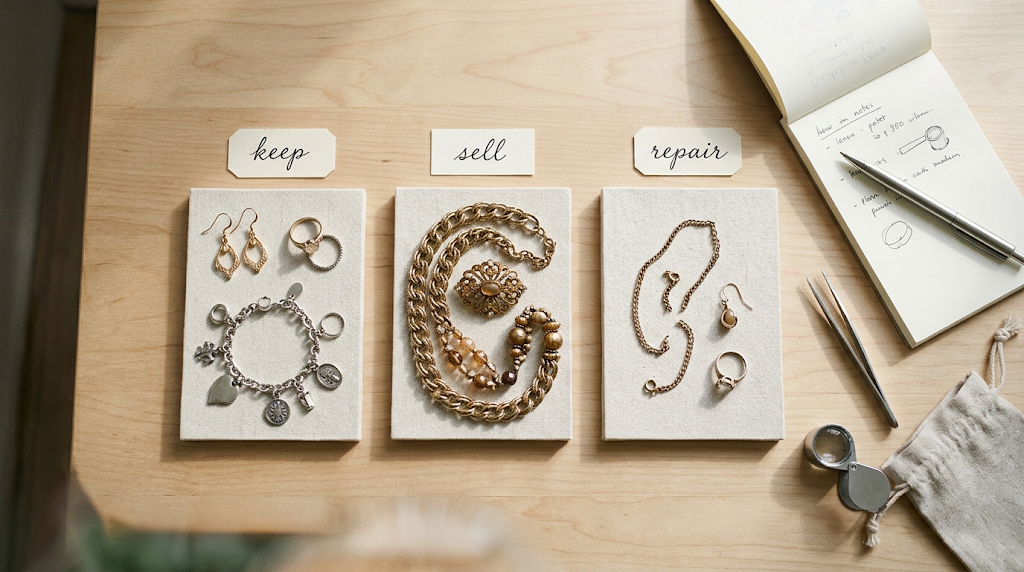
- Simple checklists, guiding readers through sorting items into keep, sell, repair, and uncertain piles
- Stories of surprising value, showing that broken or unfashionable pieces often have real metal value, without promising specific amounts
- A gentle “no obligation” message, making clear that finding out what something is worth does not mean selling it
- Relatable, human tone, acknowledging the sentimental side instead of treating everything as a transaction
“We never want anyone to feel they have to decide today,” says Avi-Meir Zaslavsky. “The first step is simply looking at what you have. Once people do that, the rest tends to follow naturally.”
Educational Content That Answers the Real Questions
People with unwanted jewelry search in the language of confusion and curiosity. Education that answers those questions directly attracts exactly the right audience.
Strong content topics include:
- “What can I do with old jewelry I don’t wear?”, a broad guide covering selling, repurposing, repairing, and donating
- “Is broken jewelry worth anything?”, explaining that damaged items often retain value based on their metal
- “How to tell if your jewelry is real gold”, covering hallmarks, karat marks, and basic at-home checks, with honest limits on what home tests can prove
- “What do 10k, 14k, 18k, and 24k mean?”, a clear explanation of purity
- “How is old gold valued?”, describing weight, purity, and market price
- “Can I sell a single earring or a mismatched set?”, addressing a very common question
- “Gold-filled, gold-plated, and solid gold: what’s the difference?”, helping owners understand what they have
- “What should I do with inherited jewelry?”, a sensitive, practical guide for families
- “Should I sell, repair, or reset old jewelry?”, offering balanced options beyond selling
Because many of these searches begin as informational, content that treats them seriously builds trust long before any inquiry.
Making Pricing and Process Transparent
Uncertainty about price and process is the biggest barrier, so transparency is the most powerful tool.
- A plain-language explanation of how offers are calculated, covering weight, purity, and current market price
- An explanation of why offers differ from the quoted market price, including the business’s costs and refining process
- A step-by-step walkthrough of the process, from first contact to payment
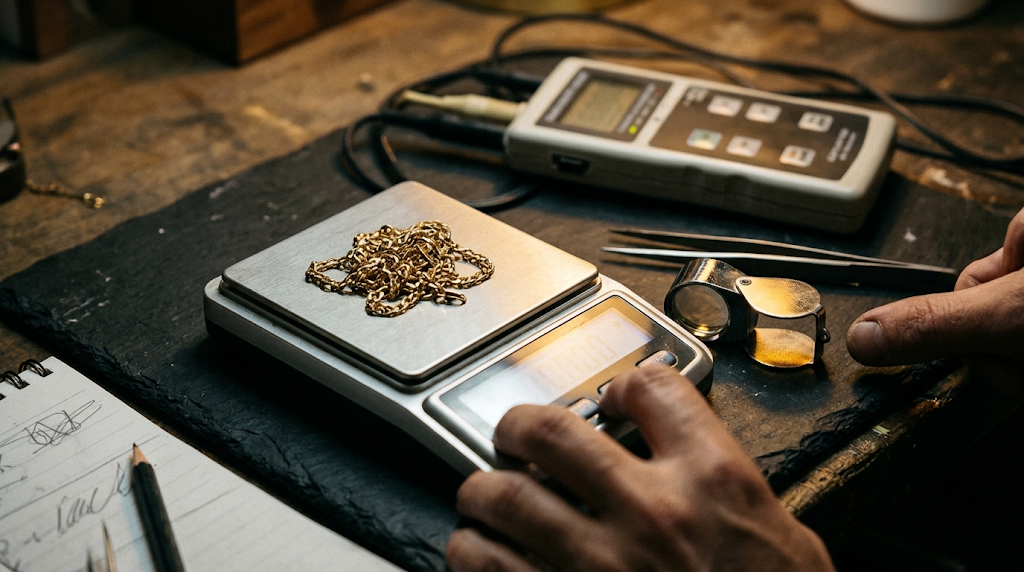
- Information about testing and weighing, ideally with photos or video of the actual process
- Clear statements that offers can be declined, with items returned unchanged
- Information on documentation and identification requirements, which many regions require for precious metal purchases
- Transparent payment methods and timelines
Because regulations about buying precious metals, record-keeping, and identification vary by location, businesses should state accurately what applies in their jurisdiction.
“The more clearly we explain how we reach a number, the more comfortable people feel,” reflects Avi-Meir Zaslavsky. “Even when the number is lower than they hoped, understanding it builds respect.”
Tools That Turn Curiosity Into Leads
Interactive resources help owners take the first step without any pressure.
- A simple value estimator, where visitors enter weight and karat to see an approximate range, with clear notes that final offers depend on testing
- A “what do I have?” identification guide, helping readers understand markings and materials
- A photo-based evaluation request, allowing visitors to upload pictures of items for a preliminary opinion
- A downloadable jewelry-box sorting checklist, offered in exchange for an email address
- A price tracker or update subscription, appealing to owners who are waiting for a good moment
- An appointment or mail-in request form, short and easy to complete
Tools like these capture contact information from people who are interested but not yet ready, creating a pipeline for future follow-up.
Handling the Sentimental Side With Care
Unwanted jewelry is often tied to memory, and ignoring that side makes marketing feel cold. Sensitive content separates a trusted advisor from a faceless buyer.
- Acknowledge that some pieces carry emotional weight, and that there is no rush to part with them
- Offer alternatives to selling, such as resetting a stone, redesigning a piece, or keeping a small memento
- Respect the circumstances of estate and loss, using patient, gentle language
- Avoid pressure and urgency tactics, which feel especially inappropriate in emotional situations
- Allow families to decide together, supporting group decisions with clear information
“Sometimes the right answer is to keep one piece and sell the rest,” notes Avi-Meir Zaslavsky. “Helping someone find that balance is part of the job.”
Search and Visibility Strategy
People with old jewelry search in both informational and local terms, and a combined approach reaches both.
- Informational searches, such as “what to do with old jewelry” and “is my old jewelry worth anything”
- Transactional and local searches, such as “sell old gold jewelry near me” and “where to sell broken gold jewelry”
- Long-tail questions, such as “can I sell gold-plated jewelry” or “how much is a gold chain worth by weight”
- Dedicated pages for specific situations, such as inherited jewelry, broken jewelry, and single earrings
- A fully optimized Google Business Profile, with accurate details and real photos
- Seasonal timing, publishing decluttering and moving content ahead of peak periods
- Internal links guiding readers from educational pages to estimate tools and contact options
Formats and Channels That Work
- Blog and guide content, capturing research-stage searches
- Short videos, showing items being weighed and tested, and answering common questions
- Social media carousels and reels, such as “five things to check in your jewelry box”
- Email sequences, nurturing subscribers who download a checklist or use an estimator
- Local partnerships, with estate professionals, movers, senior-living and downsizing services, and organizers
- Community workshops or events, offering free educational sessions on identifying and valuing jewelry
- Print and in-store materials, such as a simple “what’s in your drawer?” handout

Follow-Up That Respects the Timeline
Many people take months to act, and thoughtful follow-up keeps the business present without pressure.
- Gentle, educational email sequences, delivering one useful topic at a time
- Seasonal reminders, tied to cleanouts, tax time, and moving season
- Updates on market conditions, explained in plain language
- Personal replies to every inquiry, from a named team member
- Open invitations to return whenever the owner is ready
Measuring Success
- Traffic and rankings for informational and local queries
- Engagement with guides and tools, such as time on page and estimator use
- Checklist downloads and email sign-ups
- Inquiry and appointment conversion rates
- Quality of leads, including how informed and comfortable sellers are
- Time from first visit to first inquiry, revealing the true length of the decision
- Referral volume from past sellers and local partners
Bringing It Together
The drawer of old gold is one of the largest untapped sources of leads in the jewelry industry, because the people who own it are not yet looking. Reaching them means starting earlier than the sale: motivating the first step, answering their real questions, explaining pricing and process with complete transparency, offering simple tools, handling sentiment with care, and following up patiently. The reward is a seller who arrives informed, comfortable, and already trusting.
“Nobody wakes up wanting to sell a drawer of old jewelry,” Avi-Meir Zaslavsky reflects. “They wake up wanting to deal with something they’ve been putting off. If we make that easy and honest, we become the answer they were looking for all along.”
For jewelry businesses ready to meet owners at the beginning of their journey, old gold in a drawer becomes more than forgotten metal. It becomes the start of a lasting, trusted relationship.
Note: Rules for purchasing precious metals, including identification, record-keeping, and licensing, vary by location. Verify the requirements that apply in your jurisdiction before publishing process or pricing claims.