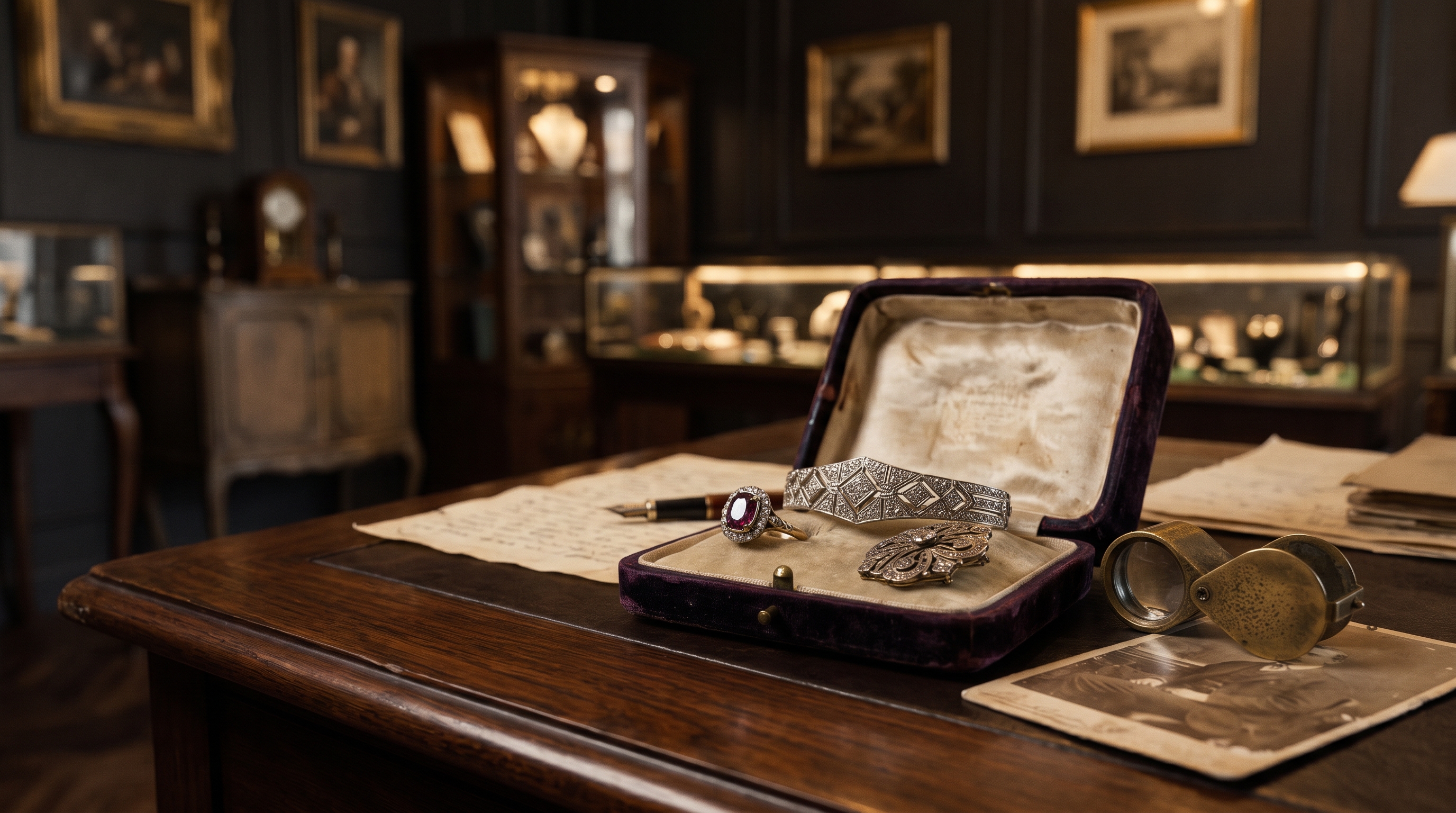
Every piece of estate or vintage jewelry arrives with something a new piece can never offer: a past. A brooch worn to a wedding in the 1950s, a Victorian ring that survived two world wars, an Art Deco bracelet that passed from mother to daughter. These pieces carry craftsmanship that is rarely reproduced today and a sense of history that customers cannot find in a modern showcase.
That same past is also the biggest marketing challenge. Buyers cannot see where a piece has been, cannot verify its age by looking, and often worry about condition, authenticity, and fair pricing. A business that sells pre-owned jewelry is, in effect, selling two things at once: the object and the confidence that the object is exactly what it is described to be. Marketing that delivers both can build one of the most loyal and valuable customer bases in the industry.
Why Estate and Vintage Jewelry Is Gaining Attention
Several trends have pushed pre-owned jewelry into the spotlight. Many buyers are drawn to individuality, preferring a piece nobody else will be wearing. Others value craftsmanship, since older pieces often feature hand-engraving, detailed milling, and design details that are uncommon in mass production. Sustainability matters to a growing group, who see buying pre-owned as a way to enjoy fine jewelry without new production. And for some, vintage pieces offer better value, with significant materials and artistry at prices that compare well with new equivalents.
Avi-Meir Zaslavsky, founder of 999Precious, has seen how strongly these pieces resonate. “Customers respond to estate jewelry differently,” Avi-Meir Zaslavsky explains. “They’re not only buying something beautiful. They’re buying a piece of someone else’s story and becoming the next chapter. That emotional pull is powerful, but it only works if the buyer trusts what they’re being told.”
Clarifying the Terms Customers Hear
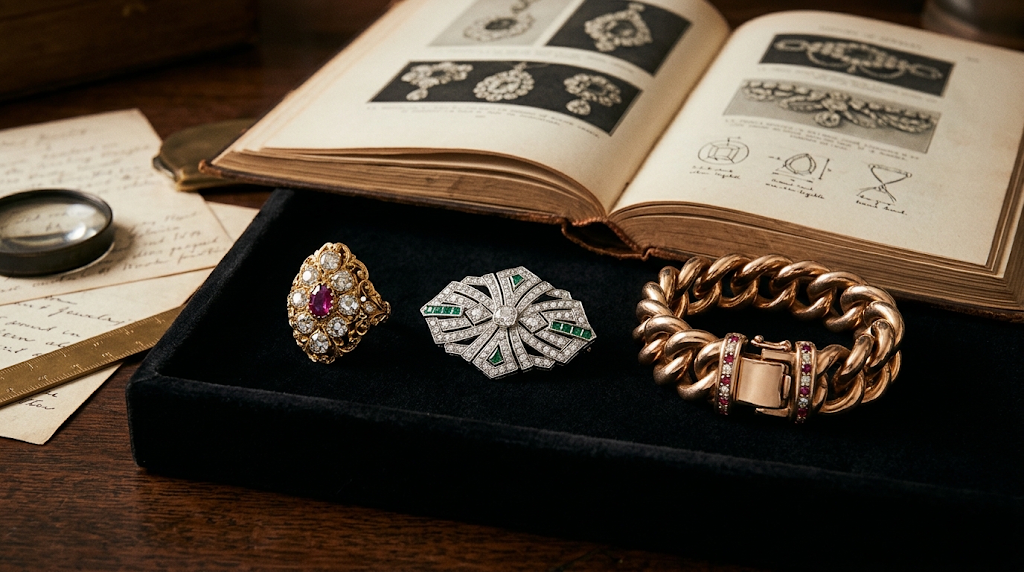
Confusion about vocabulary is common, and clear definitions help both marketing and trust. The terms are often used loosely, so a business should explain how it uses them.
- Estate jewelry generally refers to pre-owned pieces acquired from an owner or an estate, regardless of age
- Vintage jewelry is commonly used for pieces that are at least several decades old, with many dealers using a threshold of around 20 years or more
- Antique jewelry is traditionally used for pieces about 100 years old or older
- Period designations, such as Georgian, Victorian, Edwardian, Art Nouveau, Art Deco, and Retro, describe the style and era of a piece
- Signed pieces carry a maker’s mark or the stamp of a recognized house
- Reproductions and revival pieces imitate older styles but were made more recently
Definitions vary among dealers, trade organizations, and countries, so businesses should state clearly how they use each term and apply it consistently in listings and conversations.
“If you call something antique, you need to be able to stand behind it,” notes Avi-Meir Zaslavsky. “Using the words carefully is the first form of authentication.”
Authentication and Honest Description
In pre-owned jewelry, the credibility of the description is everything. A buyer relies almost entirely on the seller’s expertise and honesty, and every claim should be supportable.
Core practices include:
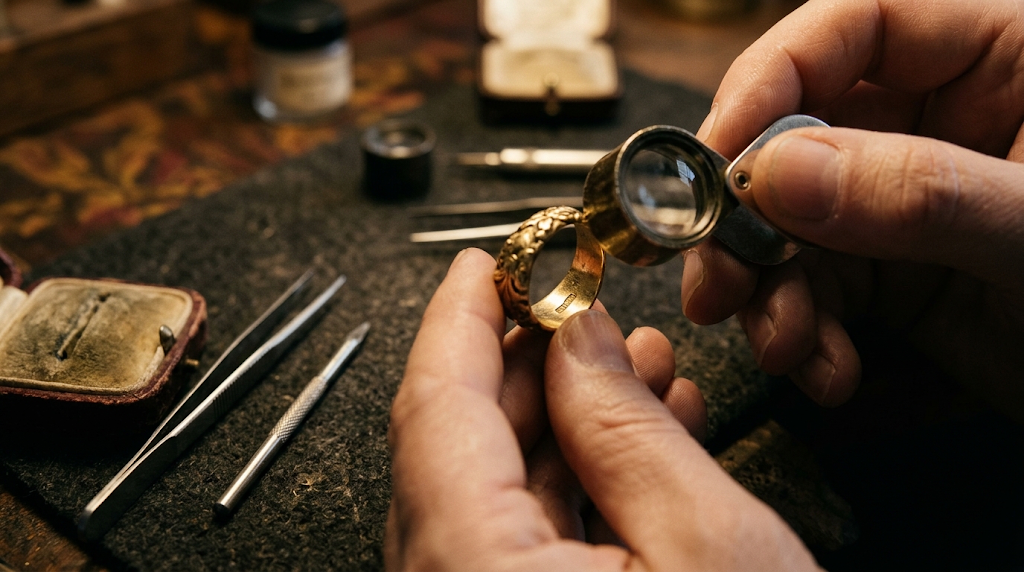
- Examining pieces carefully for hallmarks, maker’s marks, construction methods, and materials, using proper magnification and testing
- Dating pieces cautiously, using terms such as “circa” or “in the style of” when exact dating is uncertain
- Documenting stones, including whether they are natural, lab-grown, or treated, and obtaining laboratory reports for significant gemstones
- Disclosing repairs, replacements, and alterations, such as replaced stones, resized shanks, or later additions
- Describing condition honestly, including wear, scratches, chips, and any restoration
- Recording provenance when it is known and documented, and being clear when it is not
- Consulting specialists or laboratories when a piece falls outside the team’s expertise
- Keeping thorough records for each item, including photographs and notes taken at acquisition
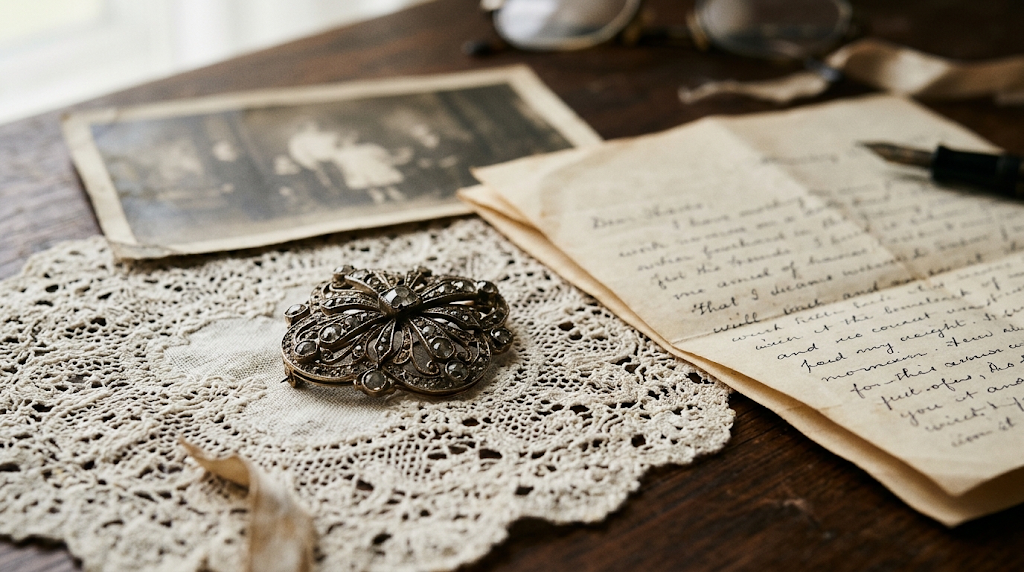
Provenance deserves particular care. A family story may be charming, but it should be presented as the owner’s account unless it can be verified. Never embellish a history to increase appeal.
“We’d rather say ‘we believe this is from the 1930s, based on these features’ than claim certainty we don’t have,” says Avi-Meir Zaslavsky. “Collectors respect honest uncertainty far more than confident exaggeration.”
Telling the Story Without Inventing One
Storytelling is the heart of estate and vintage marketing, but it must stay grounded in fact. The best stories draw from real details: the era, the design movement, the techniques used, the materials, and any verified history.
Effective storytelling approaches include:
- Era and design context, explaining what was happening in fashion, art, and culture when the piece was made
- Craftsmanship details, such as hand engraving, filigree, milgrain, or old-cut stones, and why they matter
- Material insights, describing the metals and gemstone cuts typical of a period
- Verified provenance, when documentation exists, shared with the owner’s permission
- The piece’s design language, helping customers understand why it looks the way it does
- Care and wear guidance, telling buyers how an older piece can be enjoyed today
Customers enjoy learning, and educational storytelling positions the business as a knowledgeable guide rather than a seller of generic merchandise.
Photography and Presentation
Older pieces carry details that require careful visual presentation, and buyers rely on images to evaluate condition.
- Clear, well-lit photography that shows the piece accurately, without heavy editing
- Multiple angles, including the back, the clasp, the shank, and any marks or hallmarks
- Macro images of details such as engraving, stone settings, and signs of wear
- Scale references, such as the piece on a hand, neck, or measuring tool
- Honest depiction of wear, since hiding imperfections creates disappointment and returns
- Video, showing how the piece moves, catches light, and fits
- Styling shots that show how vintage pieces can be worn in a modern wardrobe
“Older pieces have character, including small signs of age,” reflects Avi-Meir Zaslavsky. “Showing them honestly lets the right buyer fall in love with the piece as it truly is.”
Reaching Different Types of Buyers
Estate and vintage jewelry appeals to a range of customers, each with different motivations.
- Collectors who value period, maker, rarity, and provenance, and expect detailed documentation
- Design-minded shoppers drawn to unique style and craftsmanship
- Engagement and wedding buyers seeking antique or vintage rings with character
- Sustainability-focused buyers who prefer pre-owned over new
- Heritage and gift buyers looking for a piece with meaning
- Fashion-forward customers who enjoy mixing vintage with contemporary style
- Interior and period enthusiasts who connect jewelry with a particular era
Messaging for collectors should emphasize accuracy, rarity, and documentation, while messaging for design-minded buyers can focus on individuality and beauty.
Content That Builds Authority
Educational content is one of the best tools for building trust in this category, and it attracts search traffic from people researching specific eras and styles.
Strong content ideas include:
- Era guides, such as the characteristics of Victorian, Edwardian, Art Deco, and Retro jewelry
- How to identify hallmarks and maker’s marks, with clear visual examples
- Old-cut diamonds and gemstones explained, such as old mine cuts and European cuts, and why they look different from modern cuts
- How to buy vintage jewelry with confidence, including questions to ask any seller
- Antique vs. vintage vs. estate, a clarifying guide that ranks well in search
- Caring for antique and vintage pieces, including cleaning, storage, and wear considerations
- Behind-the-scenes acquisition stories, showing how pieces are sourced, evaluated, and restored
- Featured piece spotlights, telling the story and design details of individual items
Restoration, Repair, and Resizing
Older pieces often need careful attention, and how a business handles restoration affects both value and credibility.
- Explaining the difference between conservation, which preserves original character, and restoration, which may replace or rebuild elements
- Being transparent about work performed, including what was repaired, replaced, or polished
- Preserving original features where possible, since heavy polishing or alteration can reduce a piece’s character and, for collectors, its value
- Using skilled craftspeople experienced with antique construction methods
- Providing guidance on wear, since some delicate pieces suit occasional wear better than daily use
- Offering resizing and adjustment advice, noting any limits imposed by an older piece’s construction
Sourcing Pre-Owned Inventory and Working With Sellers
Estate and vintage businesses depend on a steady supply of good pieces, and marketing can attract sellers as well as buyers.
- Educational content for sellers, explaining how pieces are evaluated and what affects value
- Clear, respectful buying processes, with transparent explanations of how offers are calculated
- Sensitivity in estate situations, recognizing that families may be navigating loss
- Partnerships with estate attorneys, appraisers, and estate sale companies, who often encounter jewelry collections
- Consignment options, where appropriate, offering sellers an alternative to an outright sale
- Discretion and confidentiality, which many sellers value highly
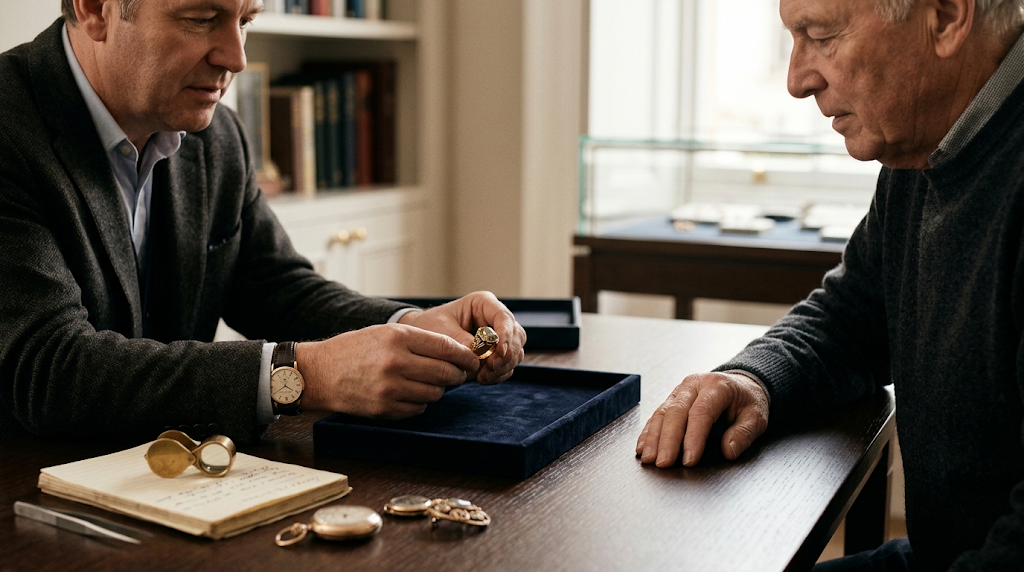
“Sellers of estate pieces are often handing over something deeply personal,” says Avi-Meir Zaslavsky. “Patience, respect, and a clear process matter as much as the offer.”
Working With Collectors
Collectors are among the most valuable and demanding customers in this category, and relationships with them are often built over years.
- Understanding specific collecting interests, such as a particular era, designer, or type of piece
- Offering first access to new acquisitions that match a collector’s focus
- Providing detailed documentation and, where relevant, references to published sources or auction comparisons
- Sharing expertise generously, which builds the credibility collectors rely on
- Attending antique shows, auctions, and collector events, where relationships form naturally
- Keeping wish lists, so the business can notify collectors when a desired piece appears
- Respecting discretion, since many collectors value privacy
Channels That Work for Pre-Owned Jewelry
- Instagram, Pinterest, and short-form video, where visual storytelling and detail shots perform well
- Blog and search content, capturing research about eras, styles, and buying guidance
- Email, ideal for new arrival announcements and collector updates
- Antique fairs, estate sales, and jewelry shows, for in-person trust building
- Local partnerships with estate professionals, appraisers, and interior designers
- Google Business Profile and local search, for buyers and sellers looking for nearby specialists
- Private viewings and appointments, particularly for higher-value pieces
Measuring Success
- Engagement with era and educational content, such as time on page and saves
- Inquiries and consultations referencing specific pieces or guides
- Conversion rates by category, showing which eras and price points perform best
- Seller leads and acquisition volume, from content and partnerships
- Collector retention and repeat purchases
- Return and dispute rates, which should remain low when descriptions are honest and complete
- Time to sale by piece type, informing sourcing decisions
Bringing It Together
Marketing estate and vintage jewelry works when story and trust move together. The story draws the customer in, but trust, built through careful authentication, honest condition reports, accurate terminology, and transparent restoration practices, closes the sale. Add educational content, respectful sourcing, and genuine relationships with collectors, and a business can build a reputation as a trusted guide to the past.
“Every piece has already had a life,” Avi-Meir Zaslavsky reflects. “Our responsibility is to describe that life truthfully, so that the next owner begins their chapter with confidence. When we do that well, the jewelry sells itself, and the customer returns.”
For jewelry businesses ready to embrace the character of pre-owned pieces, estate and vintage marketing offers something rare: an opportunity to sell not just beauty, but history, honestly told.
Note: Terminology, dating conventions, and disclosure requirements for antique, vintage, and pre-owned jewelry vary by country and trade organization. Verify current standards and regulations before publishing descriptions or marketing claims.