For decades, the jewelry industry treated men as an afterthought. The women’s case took up most of the floor, the marketing featured women’s hands and necks, and men appeared mainly as the person buying a gift. A wedding band, a watch, and perhaps a pair of cufflinks were considered the entire men’s category. That view is now badly out of date.
Today, men are buying chains, rings, bracelets, pendants, watches, and statement pieces for themselves, and they are doing it with more confidence and more spending power than the industry has historically acknowledged. Cultural shifts, social media, celebrity style, and a broader acceptance of men’s personal expression have all pushed the category forward. For jewelry businesses, this is one of the clearest growth opportunities available, precisely because so many competitors still market as if it didn’t exist.
Why Men’s Jewelry Is Growing
Several forces are driving the change. Men’s fashion has become more expressive, and accessories are now a normal part of personal style. Social media has made it easy to discover new looks, from layered chains to signet rings to vintage watches. Younger buyers in particular treat jewelry as self-expression, not just as a gift or a marker of status.
At the same time, the audience is underserved. Many men feel that traditional jewelry stores are not built for them. The displays, the language, and the marketing speak to someone else, and a first-time male buyer can walk in feeling out of place or unsure what to ask.
Avi-Meir Zaslavsky, founder of 999Precious, sees that gap as a major opportunity. “A lot of men want to buy jewelry and simply don’t know where to start,” Avi-Meir Zaslavsky explains. “They’re not looking for a sales pitch. They’re looking for someone who will explain things clearly, without making them feel foolish for asking. The business that does that wins a customer who often stays for years.”
Understanding the Different Male Buyers
Men’s jewelry buyers are not one group. Effective marketing starts by recognizing the distinct motivations behind the purchase.
- The self-purchaser, who buys for personal style and often researches heavily online before visiting a store
- The milestone buyer, marking a graduation, promotion, or anniversary with something lasting
- The watch enthusiast, who values mechanics, brand history, and detail, and often treats the hobby as a serious interest
- The groom, who needs a wedding band and often has little prior experience buying jewelry
- The heritage buyer, drawn to signet rings, family pieces, and classic designs
- The trend-driven buyer, following current styles in chains, pendants, and layered looks
- The gift buyer, purchasing for a father, brother, son, or friend
- The collector or investor, interested in precious metals, rare pieces, and long-term value
Each of these groups responds to different messages, and one generic campaign will rarely speak to all of them.

What the Men’s Category Includes
A strong men’s offering goes well beyond the traditional two or three items. Marketing should reflect the full range.
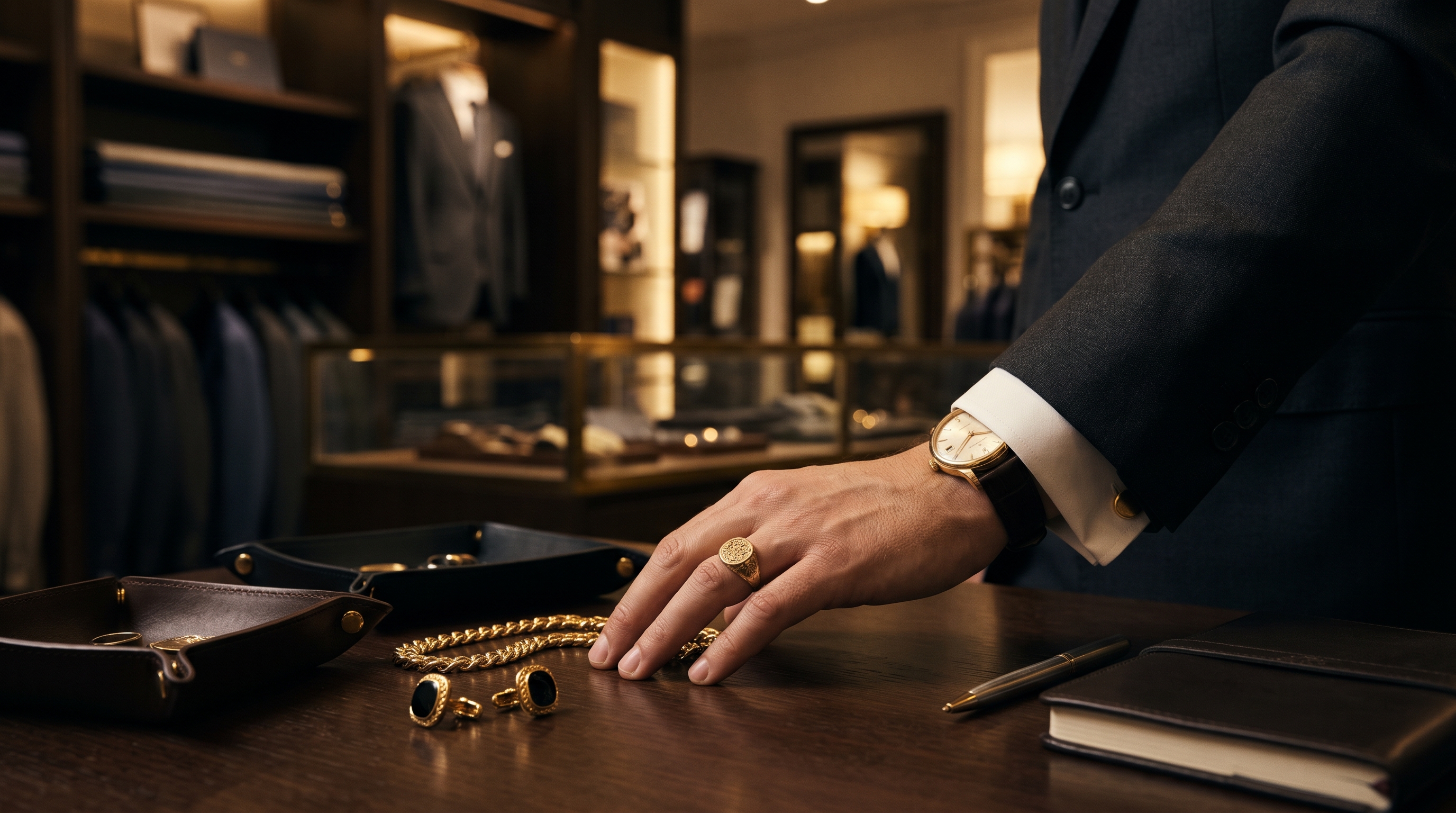
- Rings, including wedding bands, signet rings, and fashion rings in gold, silver, platinum, and alternative metals
- Chains and necklaces, from simple links to heavier styles, which are among the fastest-growing items
- Bracelets, including chain, cuff, and beaded styles
- Pendants and charms, often with personal or cultural meaning
- Watches, new and pre-owned, a category with a passionate and knowledgeable audience
- Cufflinks, tie bars, and accessories, relevant for formalwear and professional settings
- Earrings, increasingly part of mainstream men’s style
- Custom and engraved pieces, which suit personal and meaningful purchases
Showing this breadth tells male customers that the business takes the category seriously.
Tone and Language: Speaking to Men Without Stereotyping
Tone matters enormously in this category. The goal is to be clear, confident, and respectful, without relying on clichés or caricature.
Practical guidelines include:
- Be direct and informative, giving specific details about metal, weight, dimensions, and durability
- Avoid condescension, since many first-time buyers are cautious about looking uninformed
- Skip the stereotypes, such as exaggerated “tough” language or forced humor, which can feel inauthentic
- Explain without jargon, defining terms like karat, link style, or finish when they appear
- Respect personal taste, offering guidance without dictating what a man should wear
- Keep it practical, addressing sizing, comfort, everyday wear, and care
“Men tend to appreciate straightforward information,” notes Avi-Meir Zaslavsky. “If you tell them what something is made of, how it wears, and what it costs, and you do it respectfully, they trust you. It’s less about a special tone and more about treating them as capable adults.”
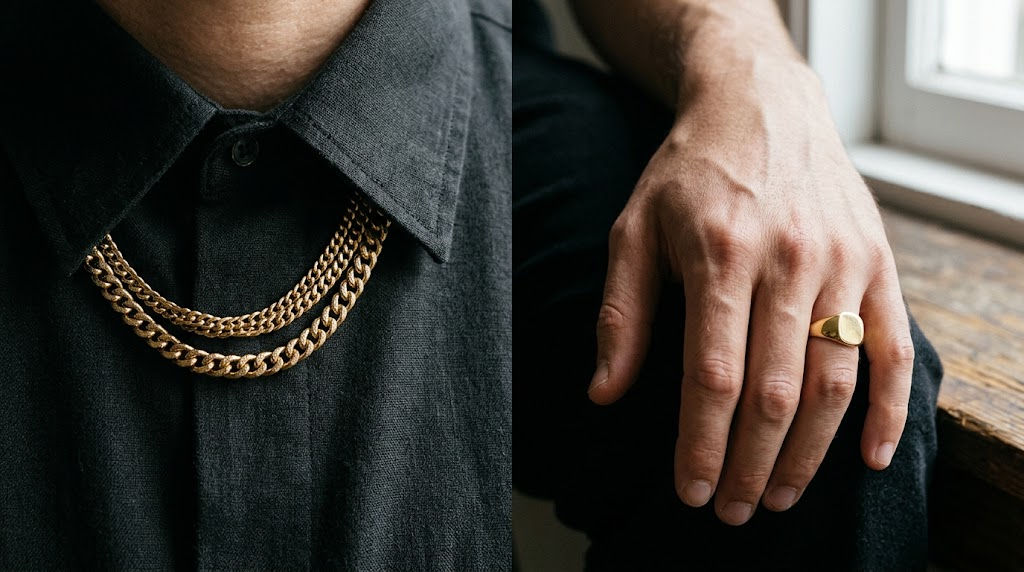
Photography and Visual Style
Visuals do most of the work in men’s jewelry marketing, and they should reflect real wear and real style.
- Show pieces on real people, in natural settings, rather than only on neutral displays
- Include scale and context, such as a chain on a shirt collar or a ring on a hand holding a coffee cup
- Feature a range of ages, builds, and styles, so more customers can see themselves
- Highlight texture, weight, and finish, with close-up shots that show quality
- Photograph layering and styling combinations, which help customers picture complete looks
- Use consistent, modern lighting, avoiding overly glossy or staged presentation
- Show everyday use, since many men want jewelry they can wear daily
Video is particularly effective. Short clips showing how a chain drapes, how a watch catches light, or how a ring is sized and fitted answer questions static photos cannot.
Channels That Reach Male Buyers
Men discover and research jewelry in specific places, and marketing should meet them there.
- Instagram and TikTok, for style inspiration, layering ideas, and short educational clips
- YouTube, where long-form watch reviews, chain guides, and buying advice attract serious researchers
- Search engines, since many men research quietly online before ever visiting, using queries about sizes, metals, and styles
- Reddit and enthusiast communities, particularly for watches, where genuine expertise is respected and overt promotion is not
- Email, useful for new arrivals, restocks, and educational content
- Podcasts and lifestyle media, aimed at style, fitness, business, and hobby audiences
- Barbershops, tailors, and menswear boutiques, which offer natural local partnership opportunities
- Google Business Profile and local search, for buyers looking for a nearby store or appointment
Because many men prefer to research independently, strong educational content often does more than advertising.
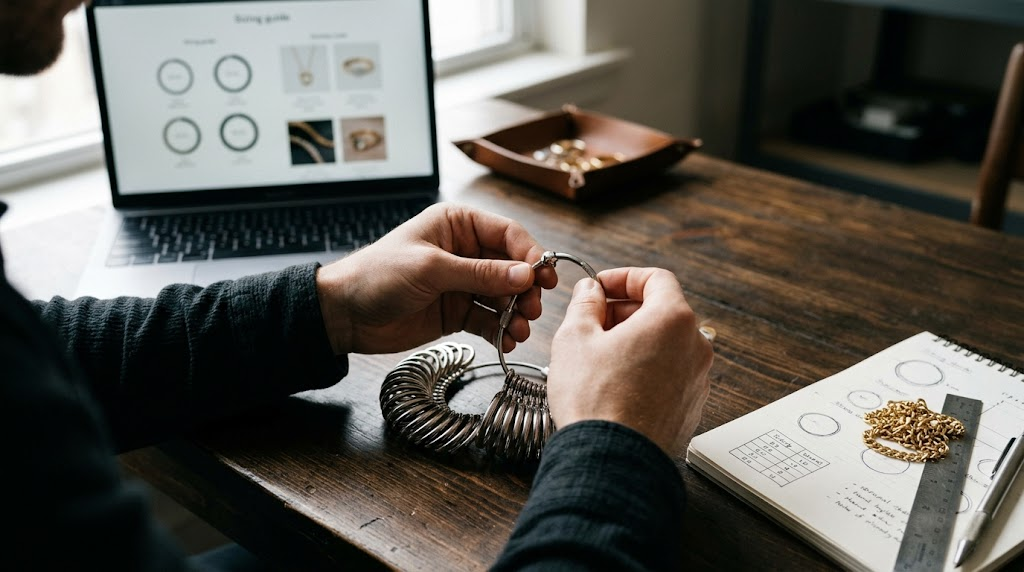
Content That Builds Confidence
Education is the most reliable way to bring hesitant buyers into the category. Content that answers basic questions without judgment attracts search traffic and builds trust.
Strong topics include:
- How to choose a chain, covering length, thickness, link types, and metals
- How to find your ring size, including tips for measuring at home
- Wedding band guides, comparing metals, widths, finishes, and comfort fit
- Gold versus silver versus platinum, with honest explanations of price, durability, and care
- How to start wearing jewelry, a gentle guide for first-time buyers
- Watch buying guides, explaining movements, materials, and styles
- Styling guides, such as how to layer chains or pair a ring with a watch
- Care and maintenance, including cleaning chains, protecting watches, and avoiding common damage
- Understanding weight and price, especially for gold chains where metal content drives value
“The most valuable thing we can do for a man who’s new to this is remove the mystery,” says Avi-Meir Zaslavsky. “Once he understands what he’s looking at, the intimidation disappears and the enjoyment starts.”
The Gift Buyer: Helping Others Shop for Men
A large share of men’s jewelry is still purchased by partners, parents, and friends, and these buyers often feel unsure.
- Gift guides organized by budget, occasion, and personality, such as a first watch, a graduation ring, or a father’s gift
- Sizing help, including discreet ways to find a ring size or chain length
- Guidance on timeless versus trend-driven pieces, so buyers can choose confidently
- Engraving and personalization options, which add meaning to gifts
- Clear return and exchange information, easing the worry of choosing wrong
- Seasonal campaigns for Father’s Day, birthdays, anniversaries, and the holidays
Content aimed at gift buyers should address uncertainty directly, offering simple recommendations instead of overwhelming choice.
Watches, Chains, Rings, and Cufflinks: Category-Specific Strategies
Each product type has its own audience and its own marketing logic.
Watches attract knowledgeable enthusiasts. Detailed specifications, honest condition descriptions for pre-owned pieces, authentication documentation, and expert commentary build credibility. This audience values accuracy above polish.
Chains depend on visual and tactile detail. Close-up photography, clear weight and length information, and styling content perform well. Transparent explanations of how price relates to gold weight and purity help buyers compare fairly.
Rings span wedding bands, signets, and fashion pieces. Sizing guidance, comfort and durability information, and personalization options matter most, along with clear explanations of metals and finishes.
Cufflinks and accessories suit professional and formal contexts. Content tied to weddings, interviews, and events, as well as gift positioning, works well.
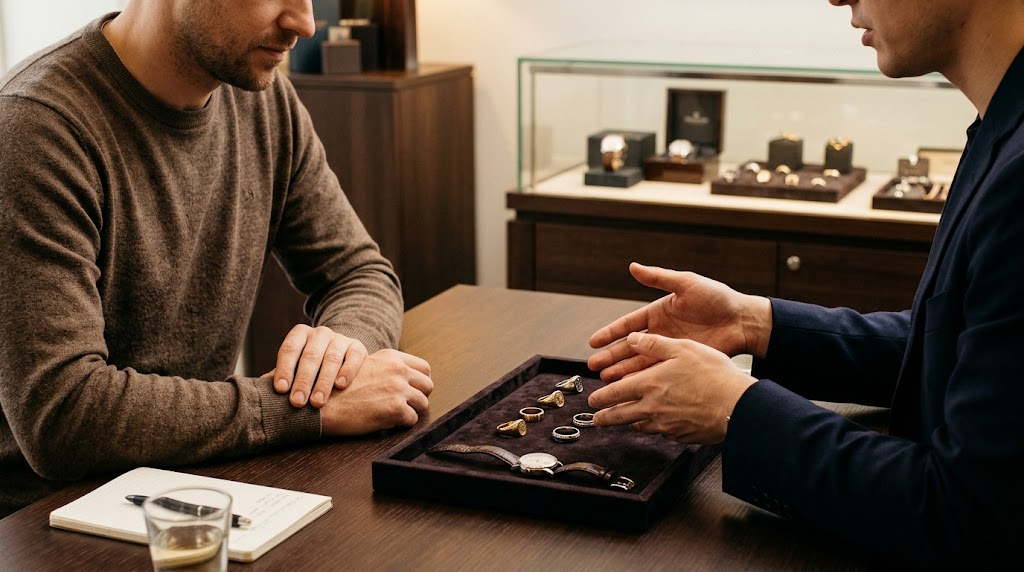
Making the In-Store and Appointment Experience Welcoming
Marketing can bring men to the door, but the experience determines whether they buy.
- Dedicated men’s displays, so male customers see an offering made for them
- Knowledgeable staff who explain without pressure or assumptions
- Private or appointment-based consultations, which many first-time buyers prefer
- Try-on and sizing support, with clear explanations of fit and comfort
- Straightforward pricing and clear information, avoiding confusing tactics
- Follow-up after purchase, with care guidance and an invitation to return
“A man who feels respected in the store becomes a repeat customer,” reflects Avi-Meir Zaslavsky. “He remembers who explained things properly, and that’s who he calls the next time.”
Partnerships and Local Opportunities
Local relationships can reach male buyers in places traditional jewelry marketing never goes.
- Barbershops and grooming studios, where style-conscious customers already gather
- Tailors and menswear boutiques, for cross-promotion around formalwear and weddings
- Wedding planners and groomsmen packages, offering matching gifts or accessories
- Fitness, business, and lifestyle communities, through sponsorships and events
- Watch clubs and collector meetups, which reward genuine expertise
- Corporate gifting and milestone programs, serving employers marking achievements
Measuring Success
Because the male audience is still growing, measurement should track both reach and the quality of engagement.
- Traffic and search visibility for men’s jewelry queries
- Engagement with educational content, such as time on page and video completion
- Conversion rates by product category, showing which items resonate
- Appointment and consultation requests from male customers
- Gift-buyer conversions around key occasions
- Repeat purchase rate, since men who find a trusted source tend to return
- Average order value, particularly across chains, watches, and custom pieces
Bringing It Together
Men’s jewelry is one of the clearest opportunities in the industry because demand is rising while many competitors still under-serve it. Success comes from understanding the different types of male buyers, presenting the full range of products, using a clear and respectful tone, showing pieces in real life, educating first-time buyers, and creating an in-store experience where men feel comfortable asking questions.
“The market is wide open for anyone willing to take it seriously,” Avi-Meir Zaslavsky reflects. “Men are ready to buy. They’re waiting for someone to speak to them clearly and treat their taste as legitimate. The businesses that do that now will own a loyal audience for a long time.”
For jewelry businesses ready to look beyond the traditional women’s case, men’s jewelry offers growth, loyalty, and a customer who rewards honest, knowledgeable service.