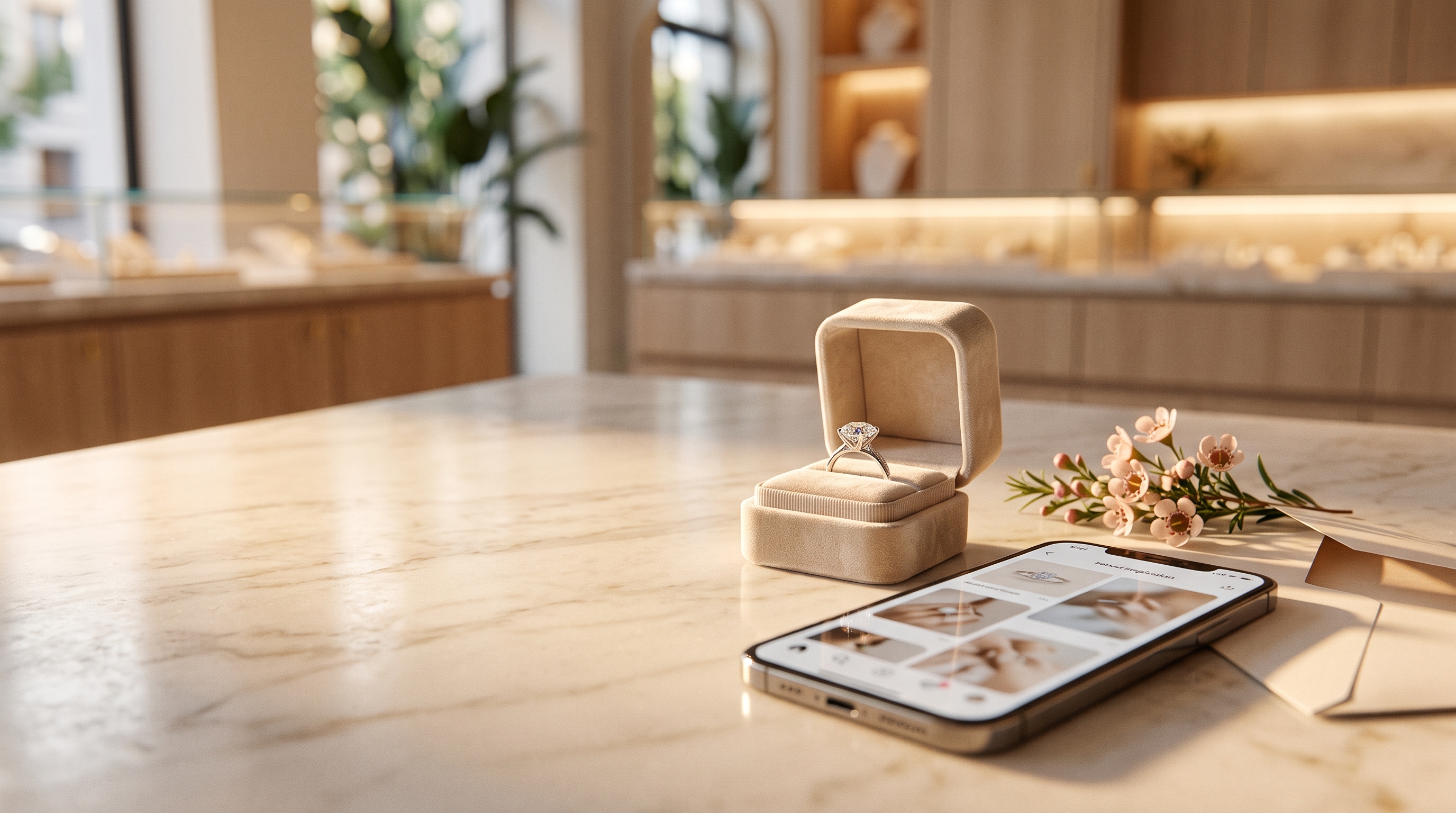
By the time someone walks into a jewelry store and says “I’m looking for an engagement ring,” the most important decisions have usually already been made. They’ve seen dozens of styles on their phone, formed opinions about diamond shapes, set a rough budget, and quietly shortlisted two or three businesses they trust. The store that wins that customer is rarely the one with the best in-store pitch. It’s the one that was already part of the conversation months earlier.
This is the central challenge of engagement ring marketing. The purchase itself is brief, but the journey leading up to it is long, emotional, and heavily researched. Businesses that only show up at the moment of purchase are competing for the last few percent of the decision. Businesses that show up early shape the other ninety.
Why the Engagement Ring Journey Starts So Early
An engagement ring is unlike almost any other jewelry purchase. It carries enormous emotional weight, a significant price tag, and a hard-to-reverse outcome. Buyers know they’re making a decision that will be worn every day, often for decades, and that anxiety pushes them to research far more than they would for a typical gift.
That research phase frequently begins six months to a year before a proposal. It often starts casually, with saved Pinterest boards, screenshots of a friend’s ring, or a late-night search for “what is a lab-grown diamond.” At this stage, nobody is ready to buy, but everybody is forming preferences and, crucially, forming opinions about who to trust.
Avi-Meir Zaslavsky, founder of 999Precious, has watched this pattern repeat across countless customers. “By the time someone contacts a jeweler about an engagement ring, they’ve often been researching for months,” Avi-Meir Zaslavsky explains. “The business they end up choosing is almost never a stranger. It’s usually the one whose guide they read, whose video they watched, or whose name kept appearing while they were learning. Being present early is what earns you the right to be considered late.”
That insight reshapes the entire marketing approach: the goal isn’t to close a sale, it’s to become the trusted source during the learning phase.

Understanding the Different People in the Journey
Engagement ring marketing is complicated by the fact that the buyer isn’t always one person, and each audience behaves differently.
- The solo buyer, often planning a surprise, researching privately and anxious about getting it right without any guidance
- The couple shopping together, a growing group that wants input from both partners and values a collaborative, low-pressure experience
- The partner dropping hints, who isn’t the buyer but influences the decision through saved images, shared links, and wish lists
- Family and friends, who often supply opinions, referrals, and budget guidance behind the scenes
- The custom-design seeker, who wants something unique and is typically researching designers and processes rather than catalog items
A single generic message rarely serves all of these groups. The most effective content and campaigns acknowledge who is actually doing the researching at each stage.
Content for the Early Research Phase
Early-stage buyers are asking basic, often slightly embarrassed questions, and the business that answers them clearly becomes a trusted guide. This is where educational content does its most valuable work.
High-value early-stage content includes:
- Beginner’s guides to diamonds and gemstones, explaining cut, color, clarity, and carat in plain language without assuming prior knowledge
- Ring style and setting guides, helping buyers discover and name what they like, such as solitaire, halo, three-stone, or vintage-inspired designs
- Budget guidance, including honest explanations of how price relates to quality and what trade-offs exist at different levels
- Lab-grown versus natural explainers, one of the most heavily searched and confusing topics for current buyers
- Metal and durability comparisons, covering gold colors, platinum, and everyday wear
- How to find a partner’s ring size and style preferences discreetly, a hugely practical topic for surprise proposals
- Timeline guides, such as how long custom pieces take to design and produce
“Nobody wants to feel foolish asking what a carat actually is,” notes Avi-Meir Zaslavsky. “The businesses that answer those questions patiently, without talking down, become the ones people feel comfortable calling when they’re ready.”

Winning Search Before the Search Becomes a Purchase
Because so much of the journey begins with online research, search visibility at the early stage is critical. Buyers move from broad, informational queries to specific, comparison-driven ones, and a business benefits from appearing at each step.
An effective search strategy typically covers:
- Broad informational terms, such as “how to choose an engagement ring” or “what to know before buying a diamond”
- Mid-funnel comparison terms, such as “lab-grown vs natural diamond” or “best engagement ring settings for active lifestyles”
- Local and service-oriented terms, such as “custom engagement ring designer near me” or “engagement ring consultation”
- Long-tail questions, which capture the specific, personal concerns buyers type into search engines late at night
Consistent, high-quality guides that rank for these stages create a path from curiosity to consultation without ever requiring a hard sell.
Visual Platforms: Where Ring Inspiration Actually Happens
Engagement ring inspiration is overwhelmingly visual, which makes Instagram, Pinterest, and short-form video platforms essential for early-stage visibility.
Effective approaches include:
- Pinterest boards and optimized pins organized by style, setting, and stone shape, since Pinterest functions as a long-lived search engine for wedding planning
- Short-form video showing how rings catch light, how settings are crafted, and how different stones look on a real hand
- Custom design process content, showing a ring moving from sketch to finished piece, which appeals strongly to buyers wanting something personal
- Hand-model and scale content, since buyers frequently struggle to judge how a carat weight or setting will look in real life
- Educational carousels and reels breaking down terminology and style differences in quick, shareable formats
Content that people save and share is especially valuable here. A saved ring photo or guide often becomes part of a couple’s planning folder, quietly keeping the business in the decision for months.

Reaching the Partner Who Isn’t Buying
One underused opportunity in engagement ring marketing is acknowledging the person who will wear the ring. They often shape the outcome through hints, saved collections, and conversations with friends, even when they believe the purchase is a surprise.
Practical tools include:
- Shareable wish lists or inspiration boards that allow someone to save favorite styles and send them to a partner
- “Send a hint” features that let a recipient share a piece without an awkward conversation
- Style quizzes that help people identify their preferences and generate a shortlist
- Content that speaks to the recipient directly, such as guides on describing a dream ring or understanding different styles
“A lot of proposals are only half surprises,” says Avi-Meir Zaslavsky. “The partner has been quietly saving pictures for a year. If your business is in those saved pictures, you’re already in the room when the decision gets made.”
Nurturing Interest Over a Long Timeline
Because the journey can span many months, businesses need a way to stay present without pressuring anyone. Email and retargeting are particularly well suited to this.
Effective nurturing tactics include:
- Educational email sequences triggered by a guide download or newsletter sign-up, delivering one useful topic at a time
- Gentle retargeting featuring helpful content rather than aggressive sales messaging
- Consultation invitations framed as low-commitment, such as a no-obligation conversation about styles and budgets
- Seasonal timing awareness, recognizing that proposal activity peaks around the winter holidays and Valentine’s Day, so research-phase engagement often surges in the preceding months
- Appointment reminders and follow-ups that feel helpful rather than pushy
The goal is to remain familiar and useful, so that when a buyer finally decides to move forward, reaching out to this business feels like the obvious next step.

Making the First Contact Easy and Comfortable
Even a well-nurtured prospect can be lost if the first conversation feels intimidating. Many buyers worry about being judged on budget or knowledge, and the transition from research to real conversation is a delicate one.
Helpful practices include:
- Offering private, appointment-based consultations where buyers can ask questions freely
- Providing virtual consultation options for buyers who prefer to start from home
- Making budget conversations normal and respectful, with no pressure to exceed a stated limit
- Showing clear process information, including timelines, customization options, and what to expect at each step
- Introducing the specialists a customer will actually work with, so the experience feels personal from the start
Measuring Early-Journey Marketing
Because the payoff arrives months after first contact, measuring this kind of marketing requires looking beyond immediate sales.
Meaningful indicators include:
- Organic traffic and ranking growth on educational engagement ring topics
- Guide downloads and newsletter sign-ups, which signal genuine early-stage interest
- Saves and shares on social content, an indicator of planning intent
- Consultation requests that reference specific content, showing which pieces influence decisions
- Time between first visit and first inquiry, revealing the true length of the journey
- Branded search growth, a sign that early exposure is turning into recognition
Bringing It Together
Engagement ring marketing works best when a business stops thinking about the moment of purchase and starts thinking about the months that precede it. By educating patiently, appearing wherever inspiration and research happen, acknowledging everyone who influences the decision, and staying helpfully present over a long timeline, a jewelry business becomes the trusted guide that couples remember when the moment finally arrives.
“We don’t try to sell an engagement ring to someone who’s just started looking,” Avi-Meir Zaslavsky reflects. “We try to be the most helpful voice they hear while they’re figuring it out. When they’re finally ready, the sale is usually the easy part, because the trust was built long before.”
For jewelry businesses willing to invest in the research phase rather than waiting for the purchase moment, engagement ring marketing becomes less about persuasion and more about presence, earning the decision by being there, helpfully, from the very beginning.